Saturday, 10 July 2010

Away on a bread baking course in Scotland !

Bread baking in Scotland? Yes, we're going to West Linton, about 20 km South of Edinburgh. We'll be learning about making country-style breads, croissants, 'mini' breads, the economics behind it, setting up a bakery and much more.
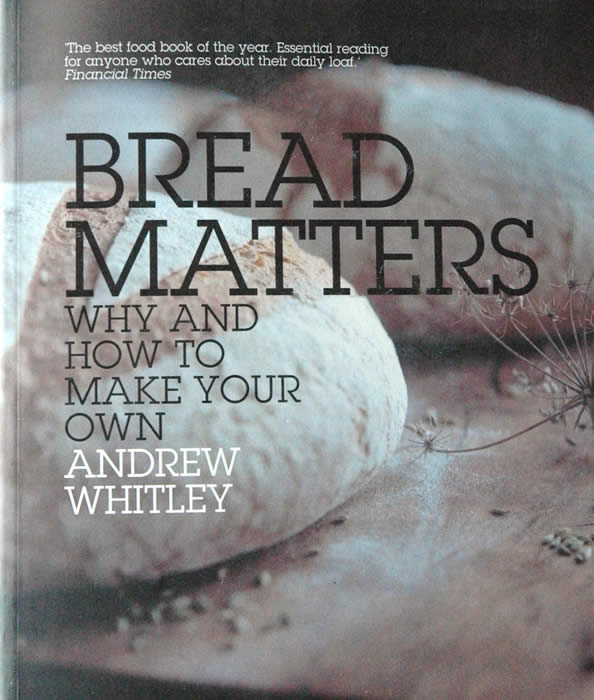
The company is called 'Bread Matters', please check it out HERE !
This means, that I won't be updating the blog for a few days. Sorry about that. Please be patient! I'll be back.....
Sjoerd

Tuesday, 6 July 2010

Lesson 22; crunchy veggies, fusion cuisine and macarons ! yummie !!

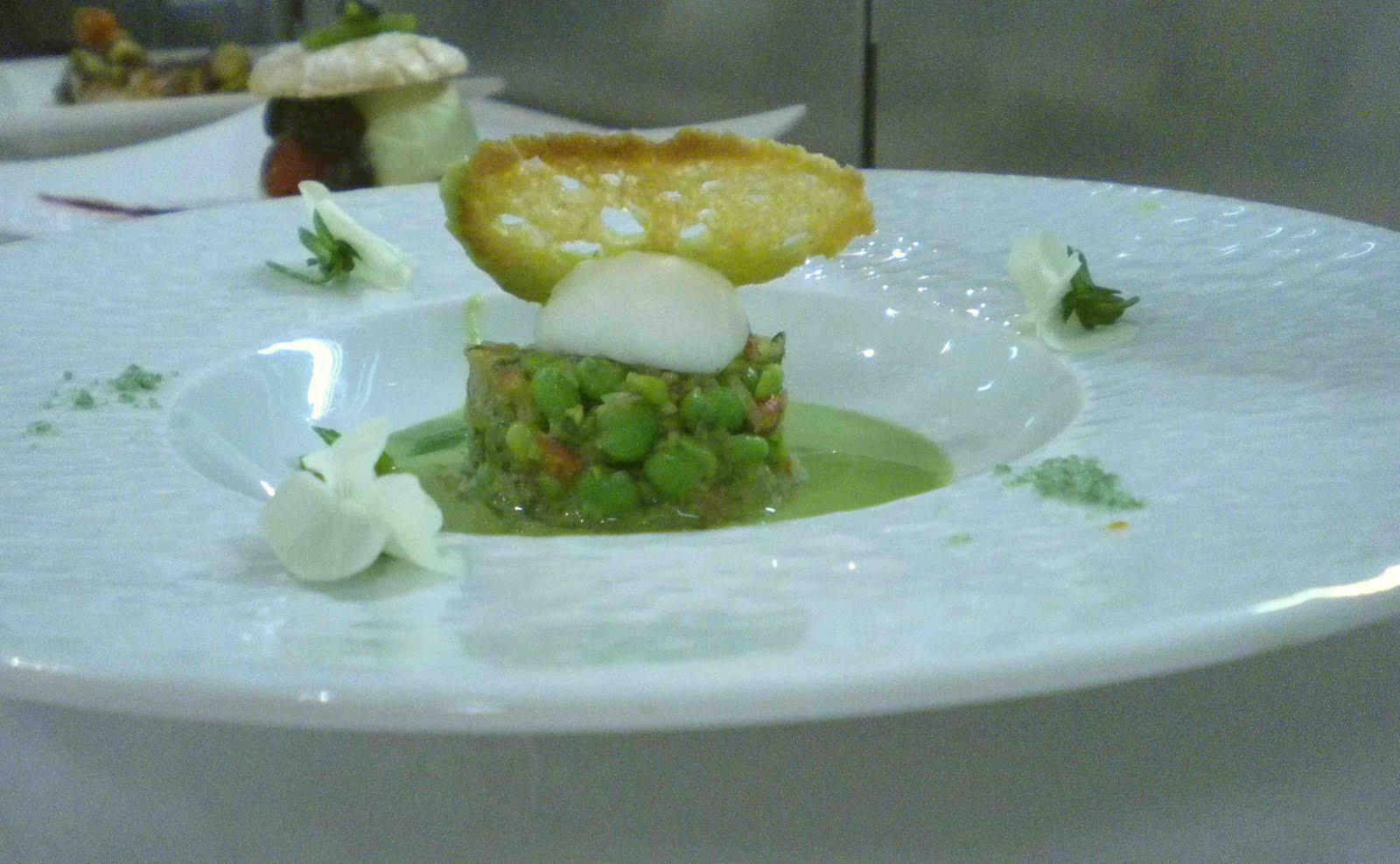
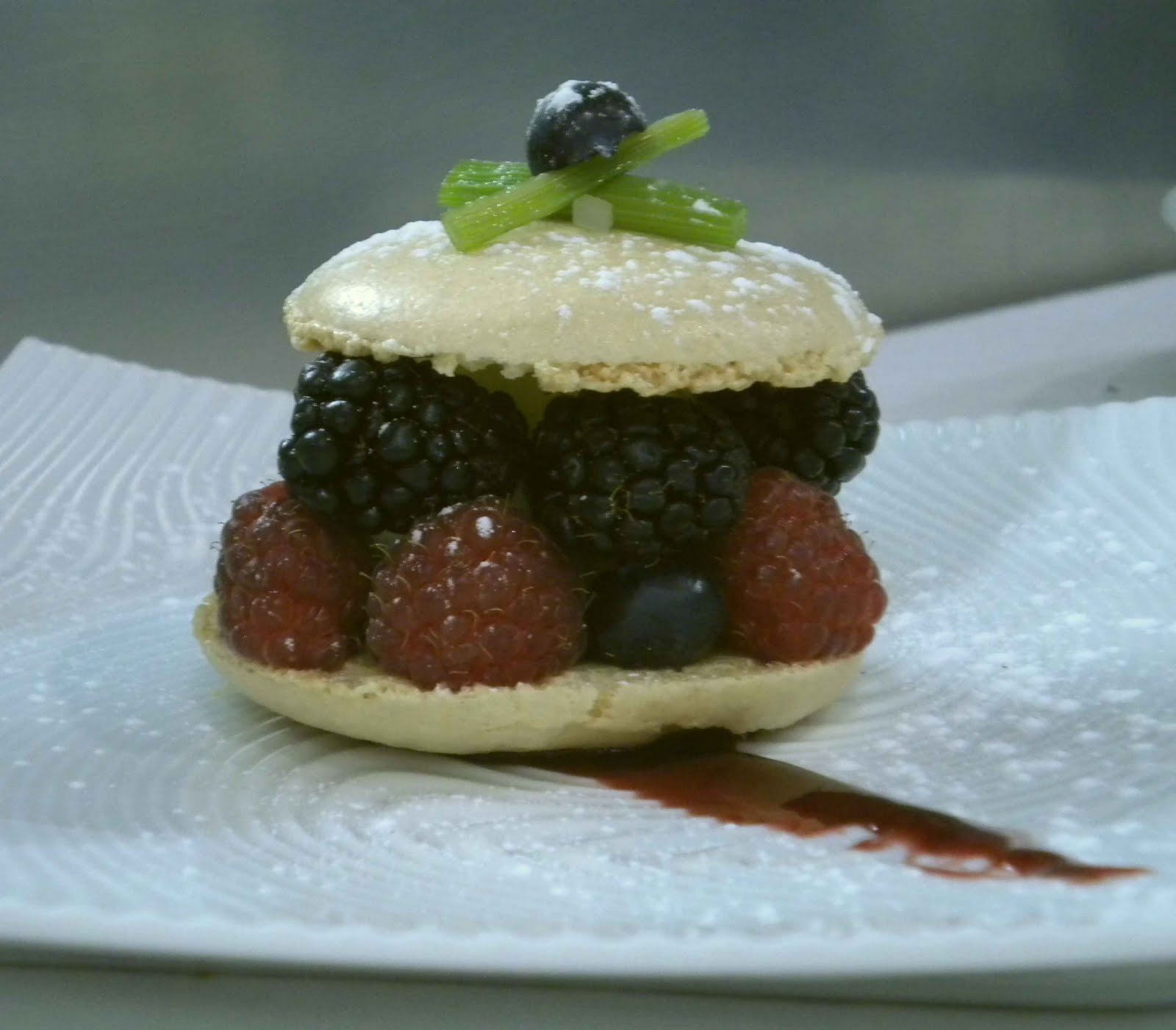
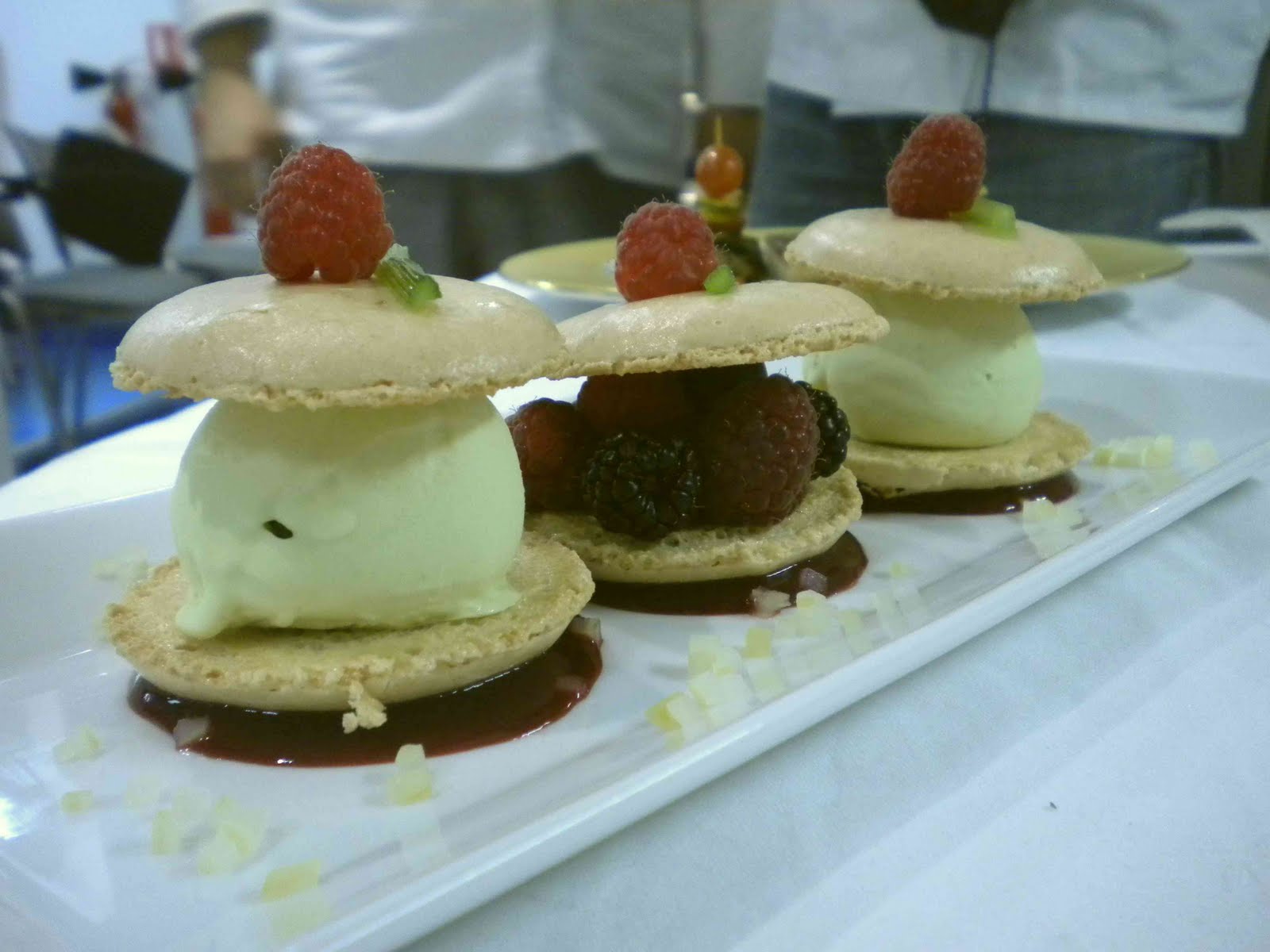
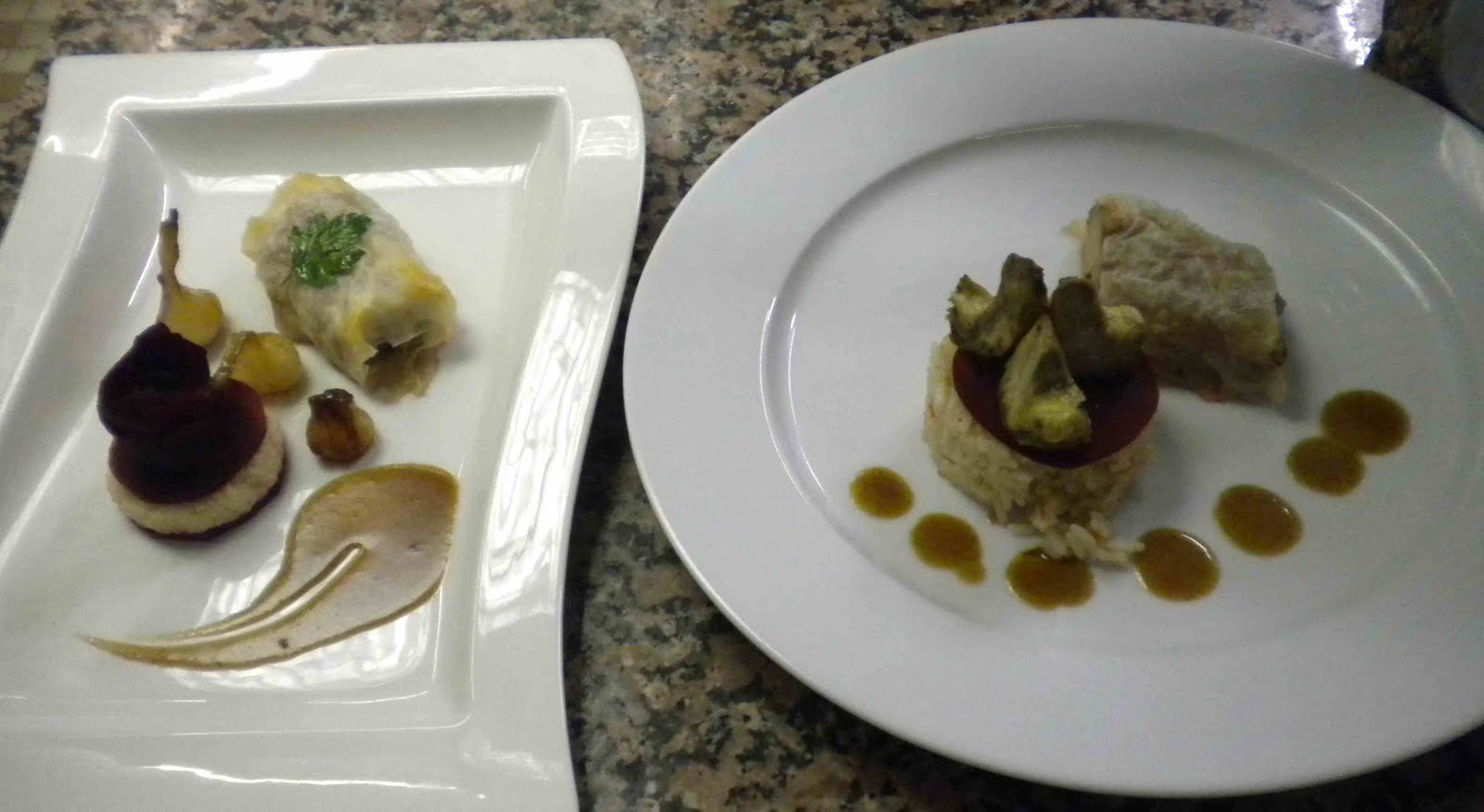
This was a strange lesson; For a starter, chef Terrien made crunchy vegetables with peas and a peppermint sorbet, for mains he called the dish fusion cuisine, combining Spanish, Asian and French influences and for dessert chef made typical French macaroons....... strange combinations indeed !
The starter could be used in the exam. Since 'a soup' is on the exam list, we could make a pea soup. The trick is to shell all (!) the peas for more flavour (or press the cooked peas through a drum sieve). The crunchy vegetables are served cold, so I guess the soup is also served cold (with the sorbet.) - but I can't really remember....
Then the interesting fusion dish. Roasted thick cod fillet, gazpacho with basil and eggplant paupiettes. This was nice. Very tasty and easy to make. This was also our practical, and I ate it all !
It looks a bit messy on the plate; Plating skills...
We used one aubergine to make the stuffing for the second aubergine..... as you do... So, put one scored aubergine with slices of garlic in it and some olive oil/salt/thyme in the oven at 180 degC for about 20 minutes - when done, scoop out the flesh and put that with some sauteed onion and breadcrumbs in slices of sauteed aubergine. Roll it up and keep warm. Tasty!
The vegetable skewers that go with it are funny. Cherry tomatoes, mushrooms, chorizo (?!), bell pepper and courgette on a skewer. Interesting combination. The gazpacho was nice. Basically, you put everything in a blender and cool it down. Served luke-warm.
All these strange combinations actually tasted very good. I've made the main course already at home. Nice!
Macaroons; Or macarons. Tricky. Frustrating. Chef said he wasn't that good with it, but I think he did a great job. Nice and smooth batter and the end-result was a great dessert. We've tried to make macaroons at home last week. 5 times already..... and most of it went straight into the bin ! I mean, it was edible, but the shape and consistency was way off. Bugger. We have to try again, it's becoming frustrating now. But I will succeed in making a proper macaroon!
You only need powdered sugar, ground almonds, some egg whites and normal sugar to make a macaroon. So it can't be that difficult. Well, it is!
Chef served this with fennel ice cream. Fennel ice cream??? Yes, and it tasted surprisingly delicious.
Thank you chef for an interesting tasting.
Until next time!

Friday, 2 July 2010

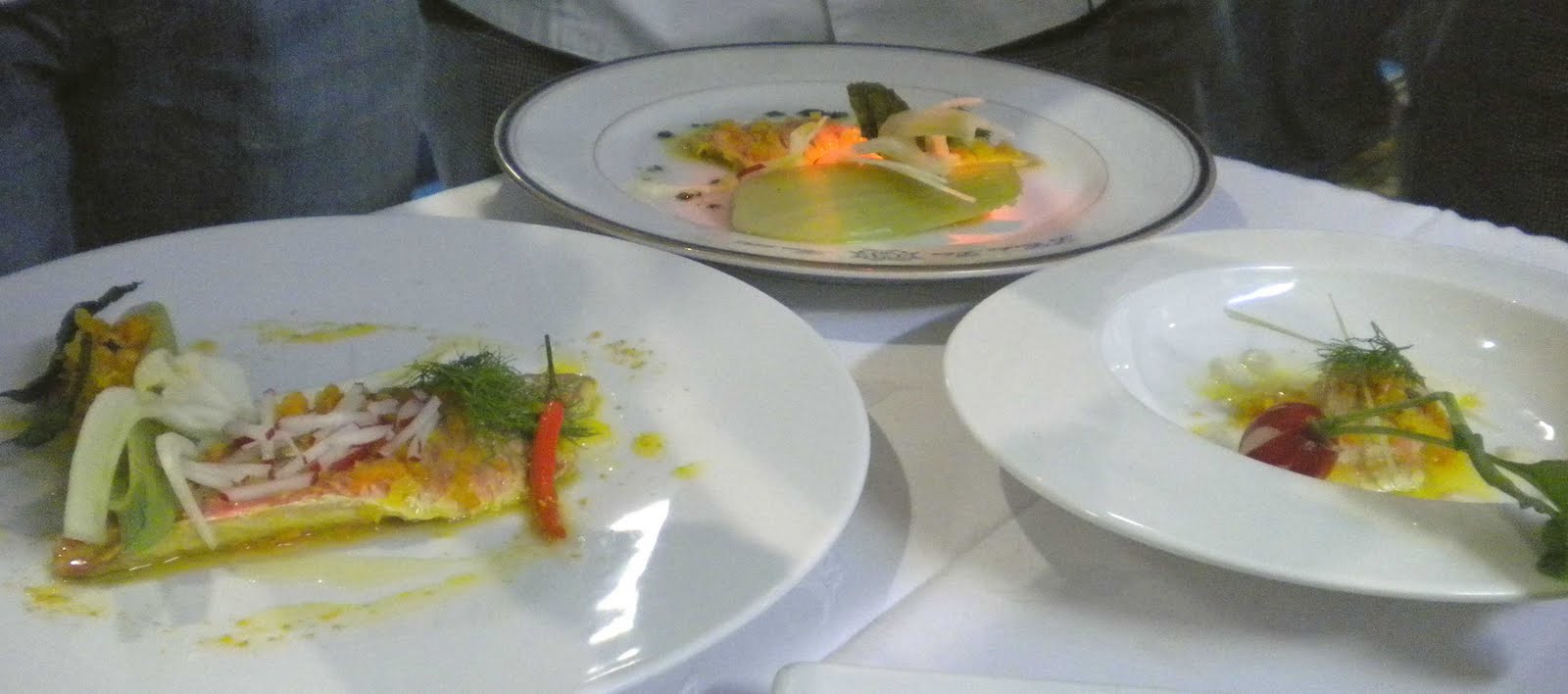
Escabėche de rouget, blancs de pintade et blancmange aux fruit de saison. oh, la,la, c'est bon!

Lesson 21;
LCB calls it 'modern cuisine'. The main course that is. I'll get back on that later.
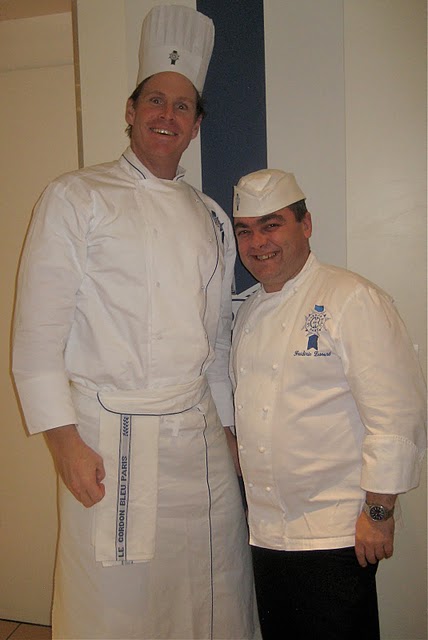
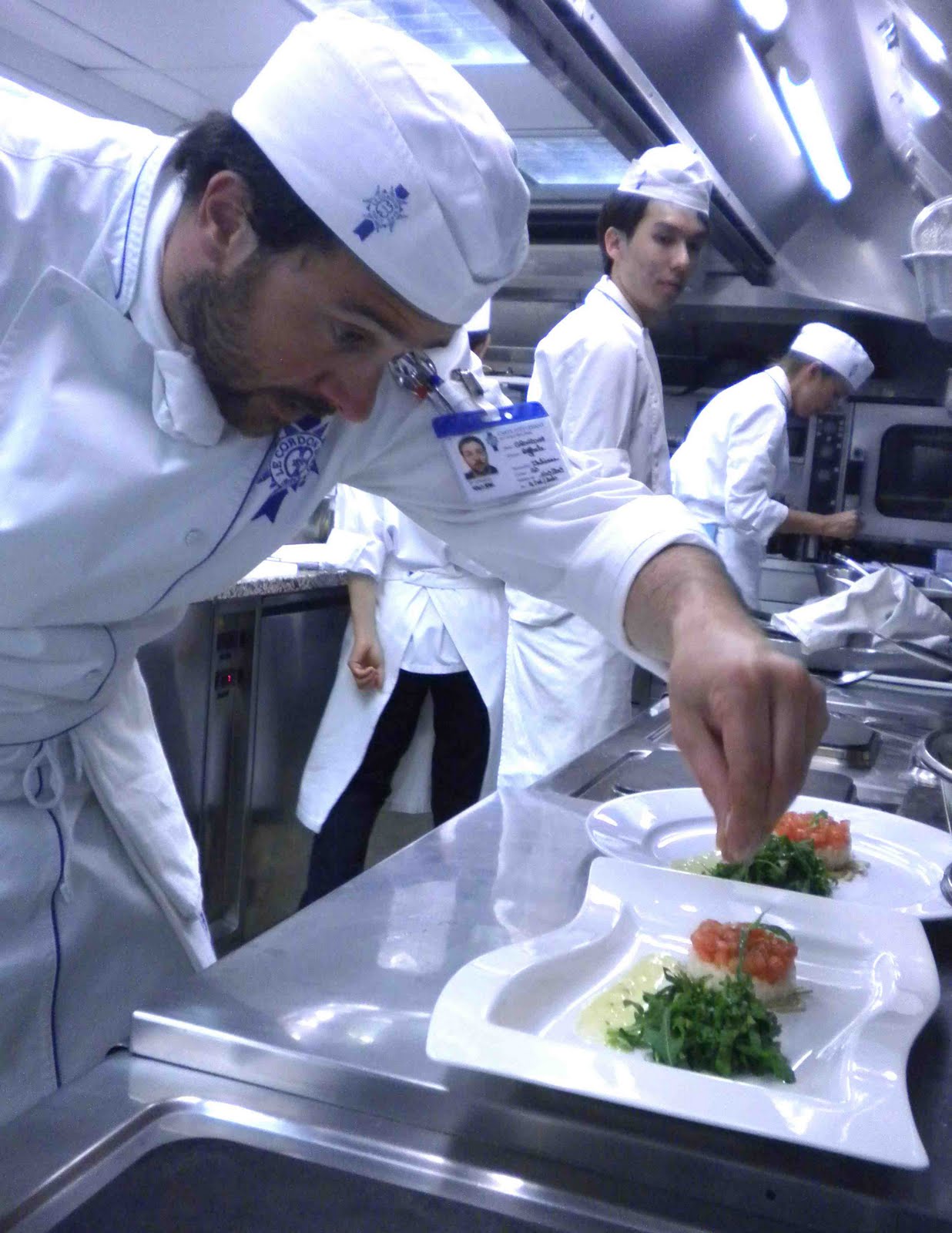
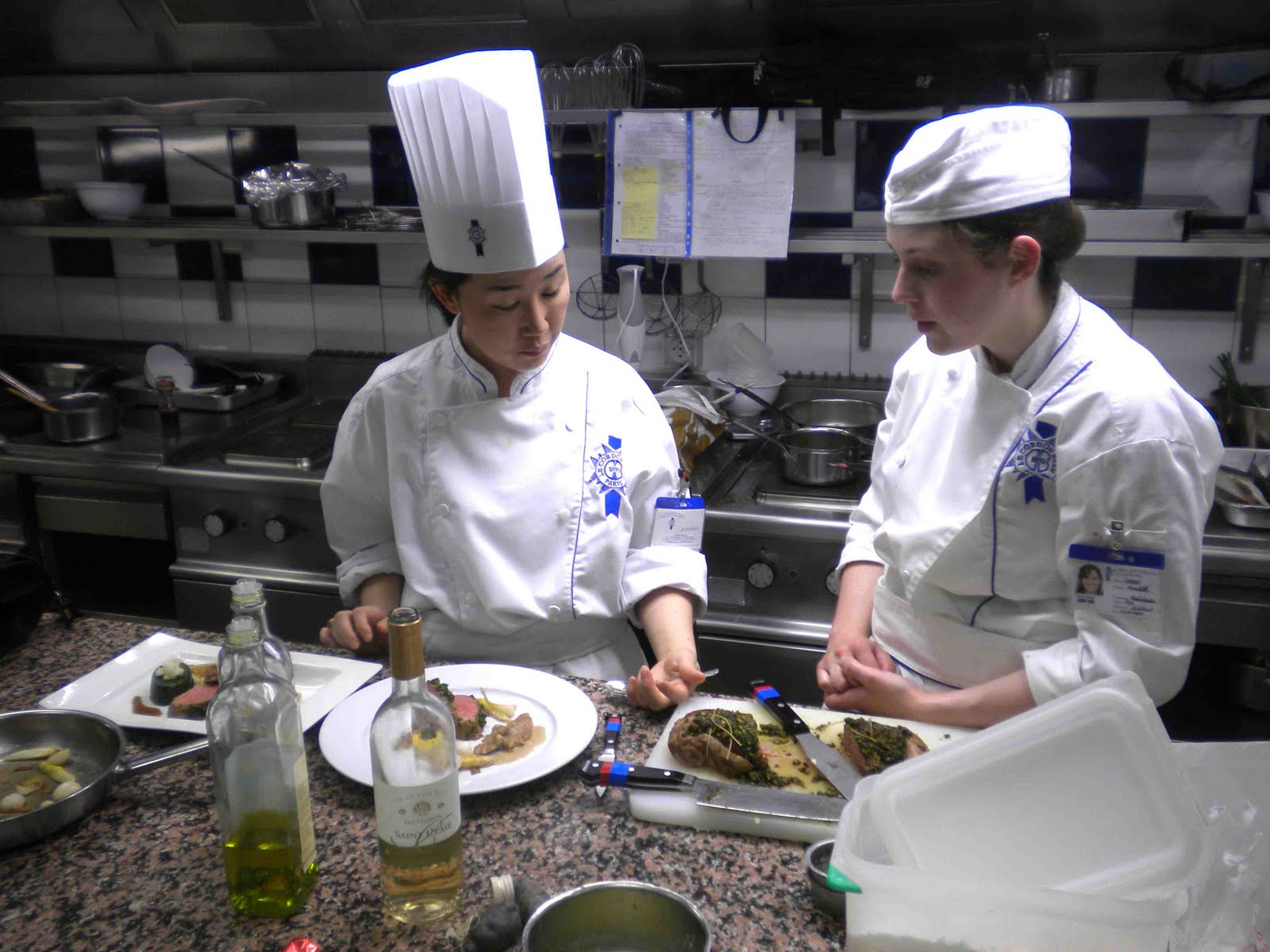
Chef Lesourd was cooking for us today. That's the little one on the right hand-side in the picture ... he's a great chef, he has super dessert plating skills and he's always talking about little tricks of the trade, selling gadgets and it's just fun to work with him.
For a starter, chef made red mullet 'escabeche' with fennel cream. The fennel cream is easy: Just put some sweated fennel (cooked) with creme fraiche in the blender. An 'escabeche' is a cooked marinade we use for the fish that consists of a brunoise of carrot, fennel and onion, some garlic, vinegar, a bit of herbs (and a bonus: saffron!)
When still warm, pour over the fish fillets. It's best to do that 24 hrs in advance. I can't remember if the dish was served hot or cold - I'd say cold, but I'm not sure. The colourful marinade can be used as a garnish; served on top of a blanched fennel leaf.

Then our 'modern cuisine'..... Guinea fowl breast cooked on the bone with lemon grass 'fricandeau' of legs and a mushroom flan. Well, modern.... I don't think so... 
You start with the standard procedure: Take the fowl, burn the feathers off (it also kills all the bacteria!), cut off the wings, take the wishbone out, cut off the legs (watch the oyster). Debone the legs and take the skin off. Chop off the backside of the carcass for the jus. The supremes are left on the breast bone for further cooking. So far so good. This was easy!
Of course we use the leftover bones and carcass to make a jus.

The meatballs in this dish are made from chorizo, mascarpone, left-over leg meat, some basil leaves and breadcrumbs. Fry the little balls (oh yeah!) in oil/butter. Don't cremate the stuff, just light-brown please.
The little flan is made with duxelles and cream. When the breasts (still on the bone) are cooked in the oven at 170 degC, slice the supreme off the breast bone with the knife. Actually, I thought it was a tasty dish, certainly no modern cuisine (more like old fashioned to me). But it was nice. Thanks chef! My practical for this went really well.
Le dessert; A fruit mixture with a mojito sorbet and a jasmine tuile.
This very refreshing dish was really really nice. There's not much to say about chopping up fruit, making a mojito and cooking a tuile. The blancmange is made from milk, almond milk and agar-agar. To make a frothy foam, just use a 'giraffe' blender. Bon appetite !

Thursday, 1 July 2010

Leçon dix-neuf et vingt. (Early May)

OK, after some sort of successful atelier, it's time for a normal demo again. Lesson 19 and 20. (3-4 May 2010) Chef Terrien in control in both demos.

Lesson 19; They call the main course 'creative cuisine', well, that has to be seen.
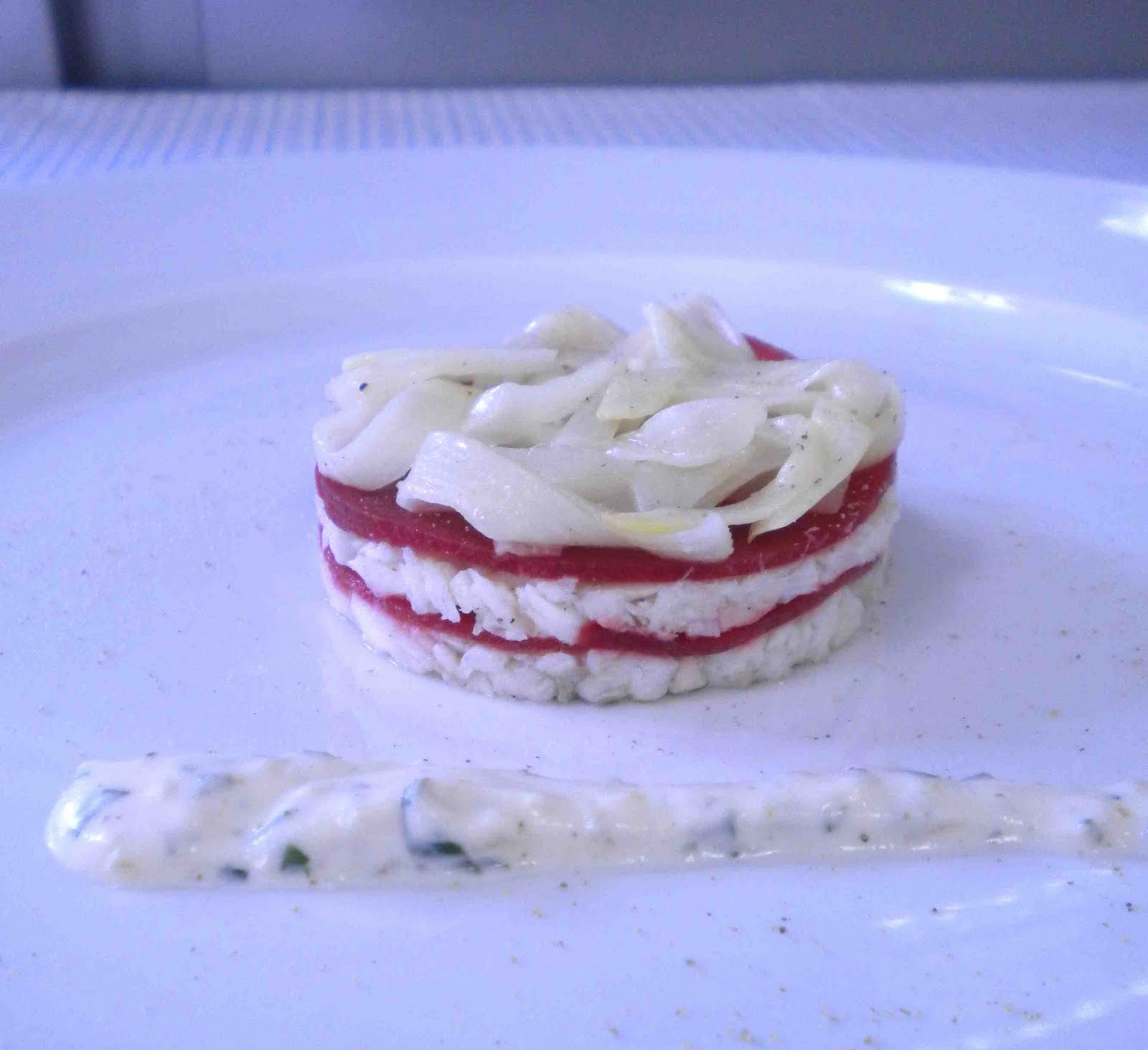
starter: Green asparagus and crab charlotte with a citrus vinaigrette.
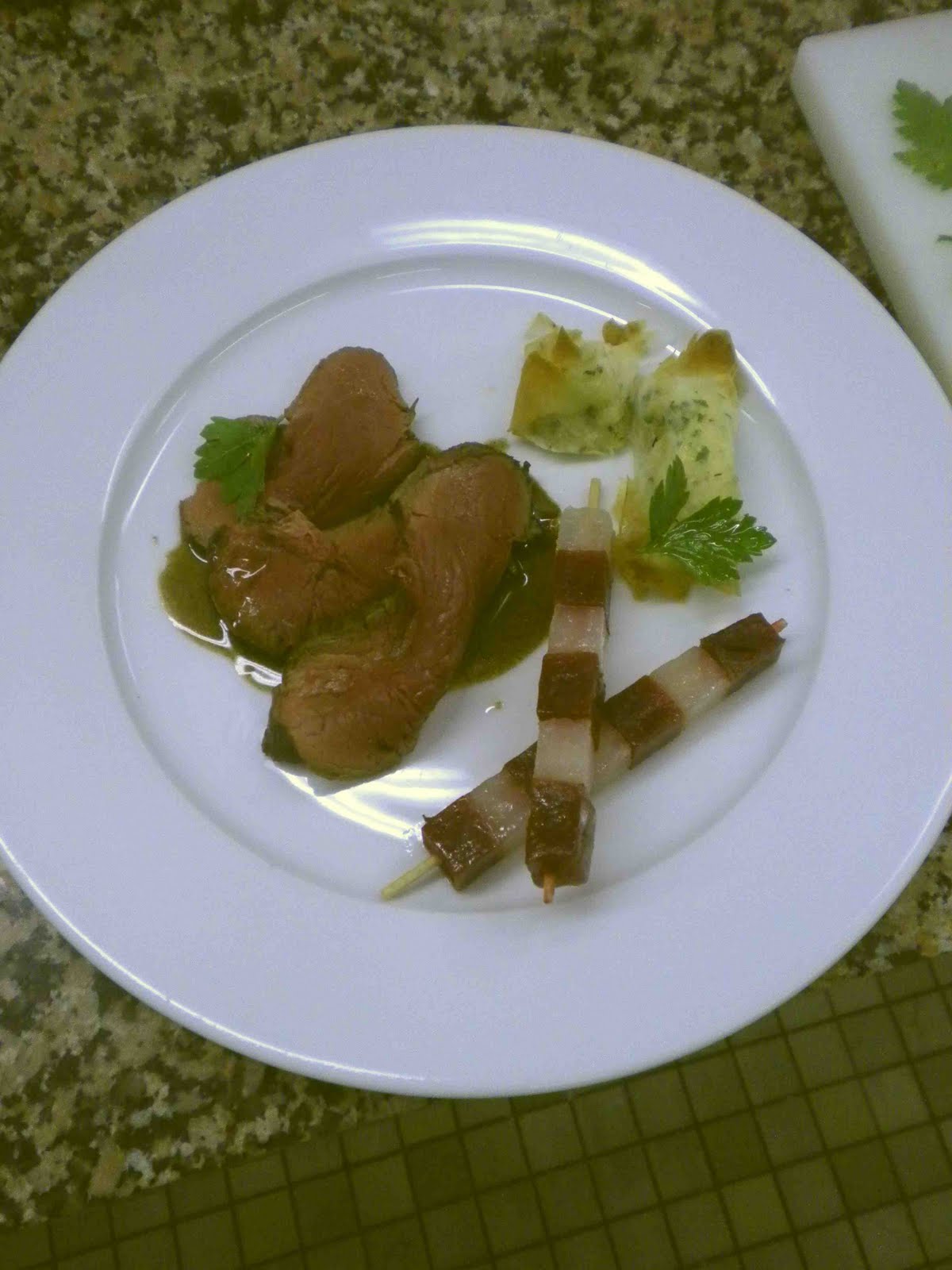
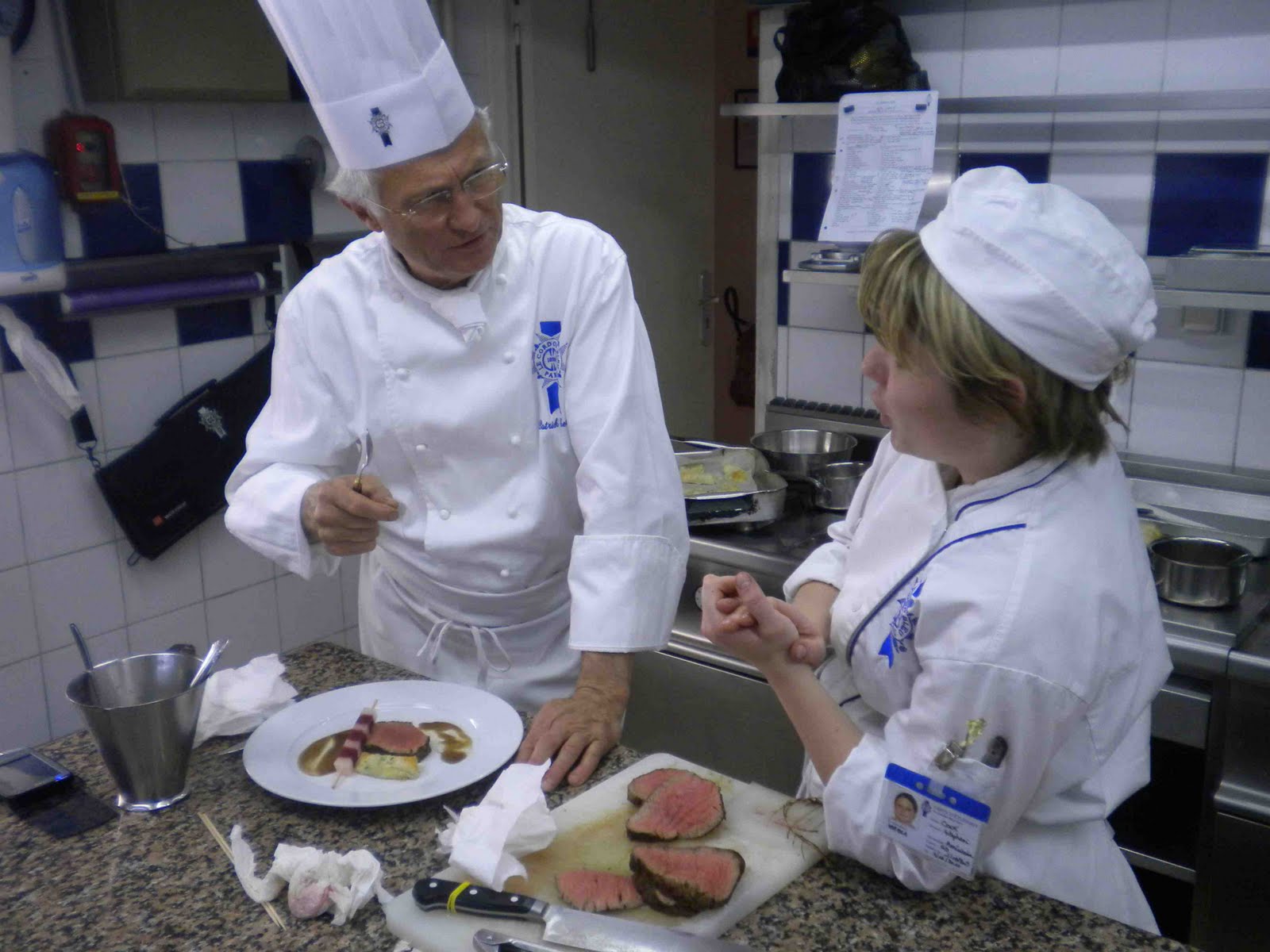
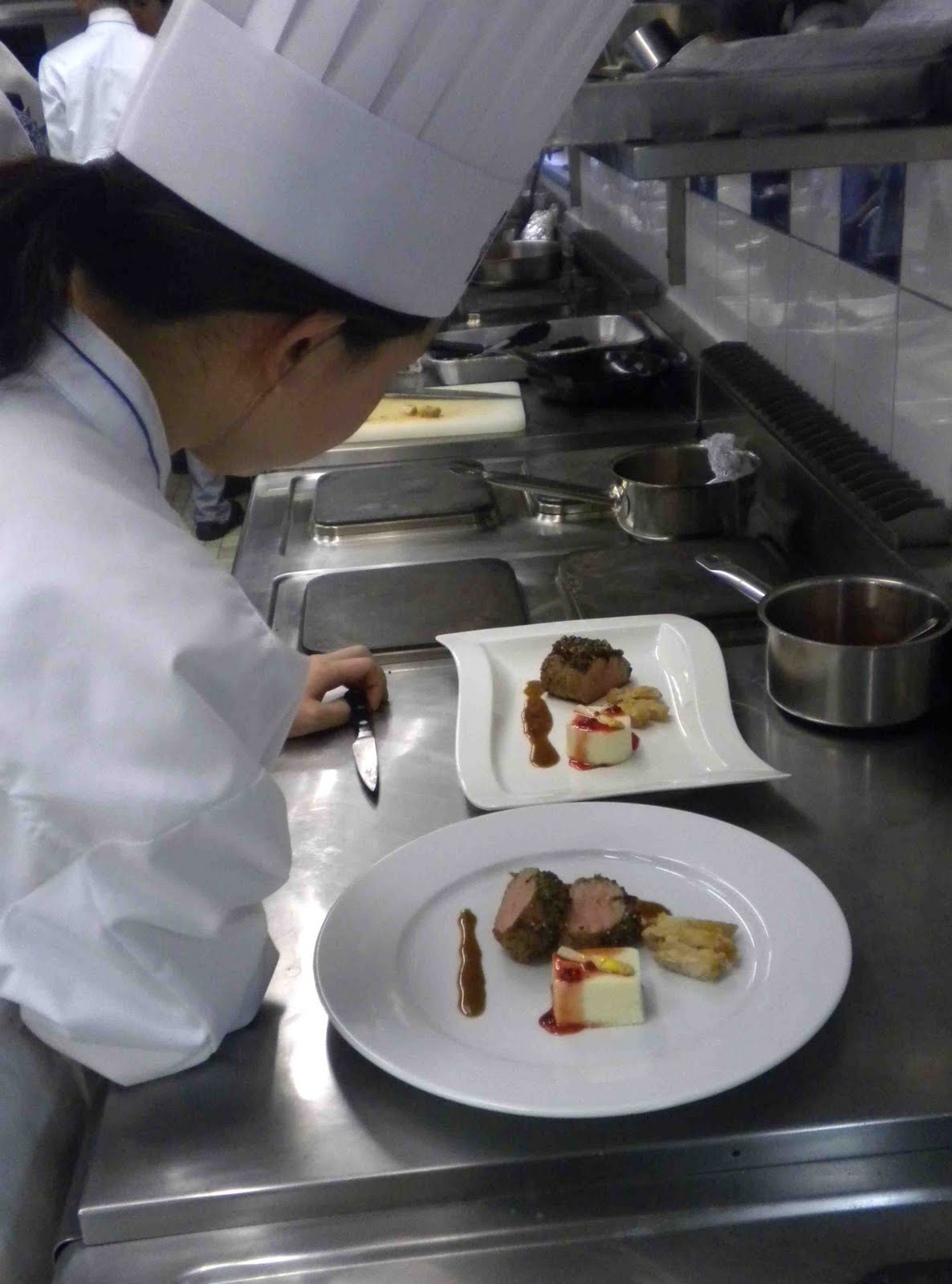
mains: Roast beef tenderloin, 'mi-venaison' marinade with soy, daikon radish and beet 'brochette' and a parsley potato crisp - oh yeah! how creative.
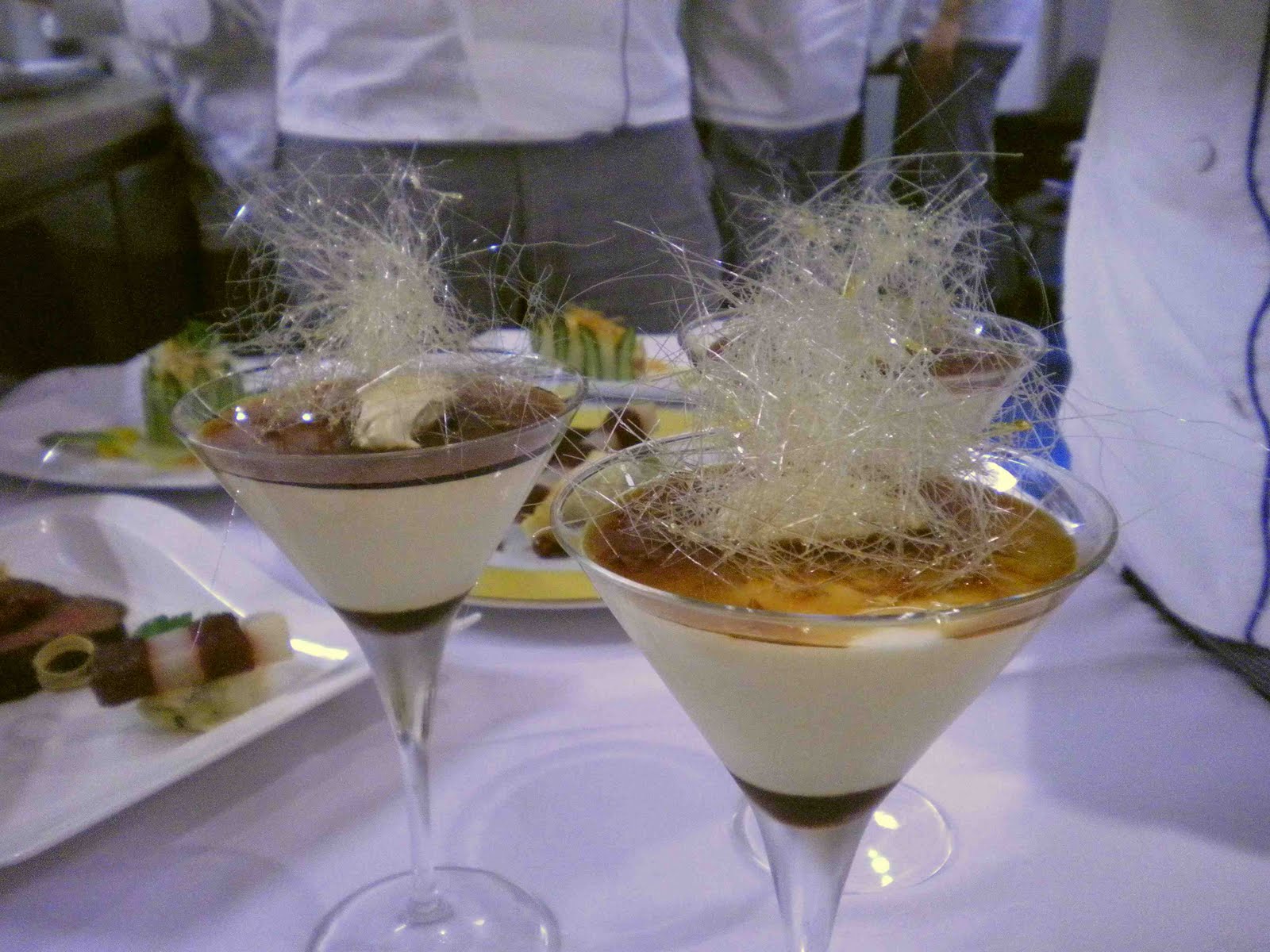
dessert: Frothy caramel with Guerande sea salt, coffee and cognac chantilly.

I remember the starter. That was delicious! And the picture looks nice as well. A very nice summer dish with cold asparagus and fresh crab meat.

The main course was quite good. 'mi-venison' marinade means that you marinade the beef for a short period of time in the fridge. Very easy to do. And a sauce is made from the beef trimmings of course...
The skewer is daikon and beet(root).


Dessert; A great presentation by chef of this dessert - and ruined within a second by our fat class idiot!
'It' ate the whole glass before we even realized it. The $%#@!


The caramel is made with a creme Anglaise (egg yolk, add hot milk, whisk like hell) and caramelized sugar/cream/milk. Finally some gelatines leaves are added. Strain, add some salt and keep cold.
Decoration with angel hair makes it the perfect dessert!


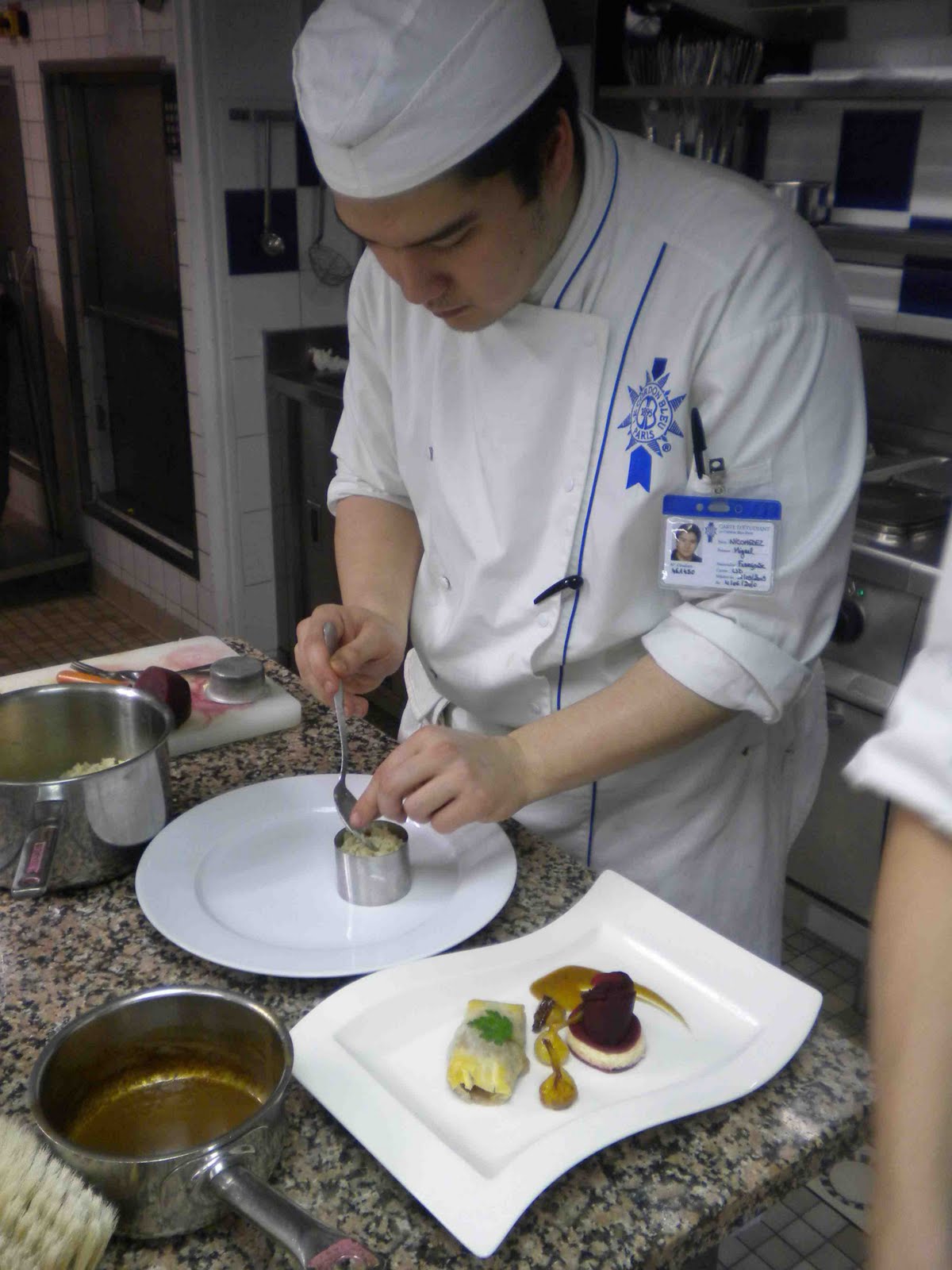
Carlos and Miguel are about to plate-up.

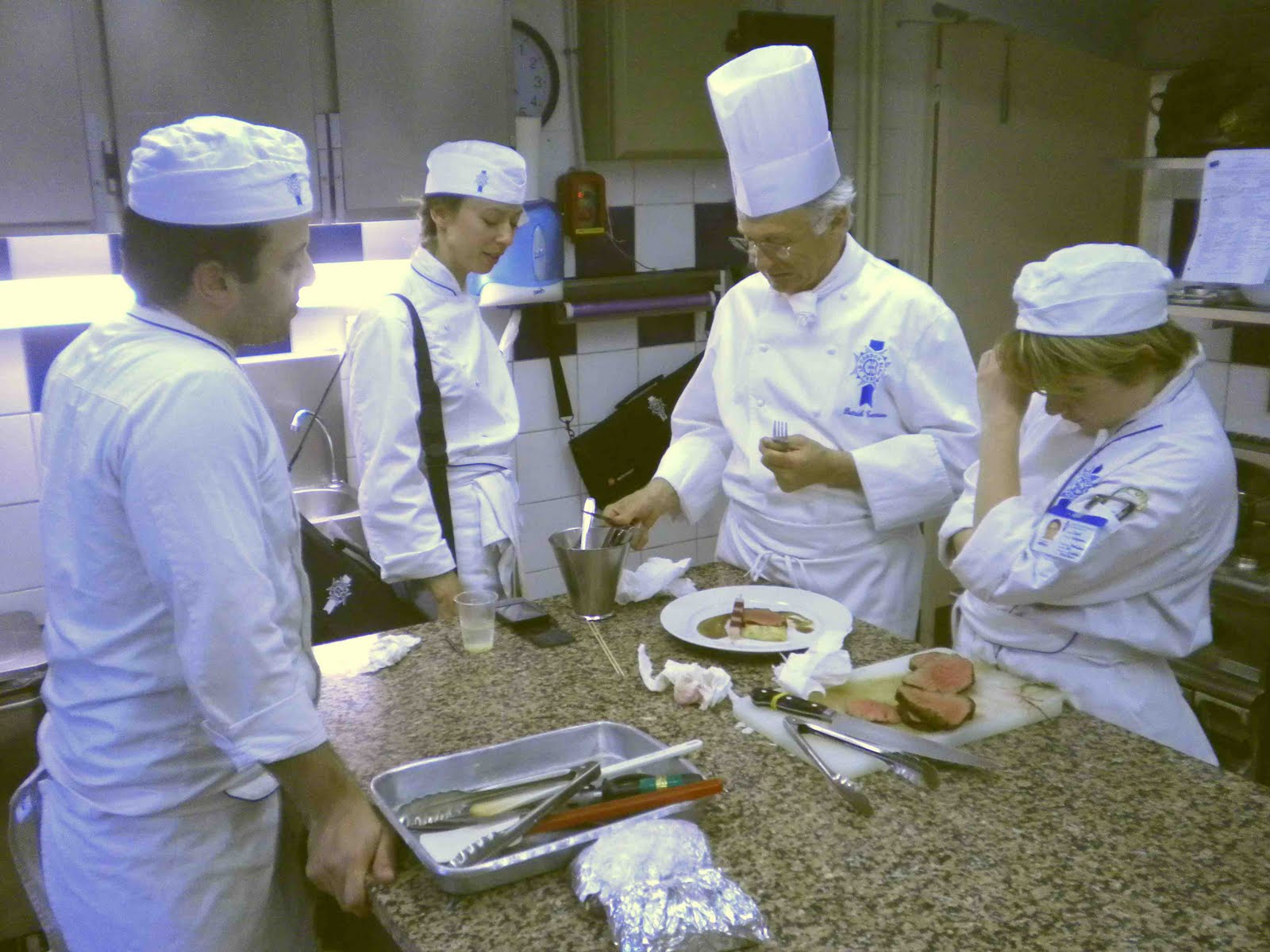
Stephanie getting feedback from chef T.

The main course for lesson 20 is creative again.
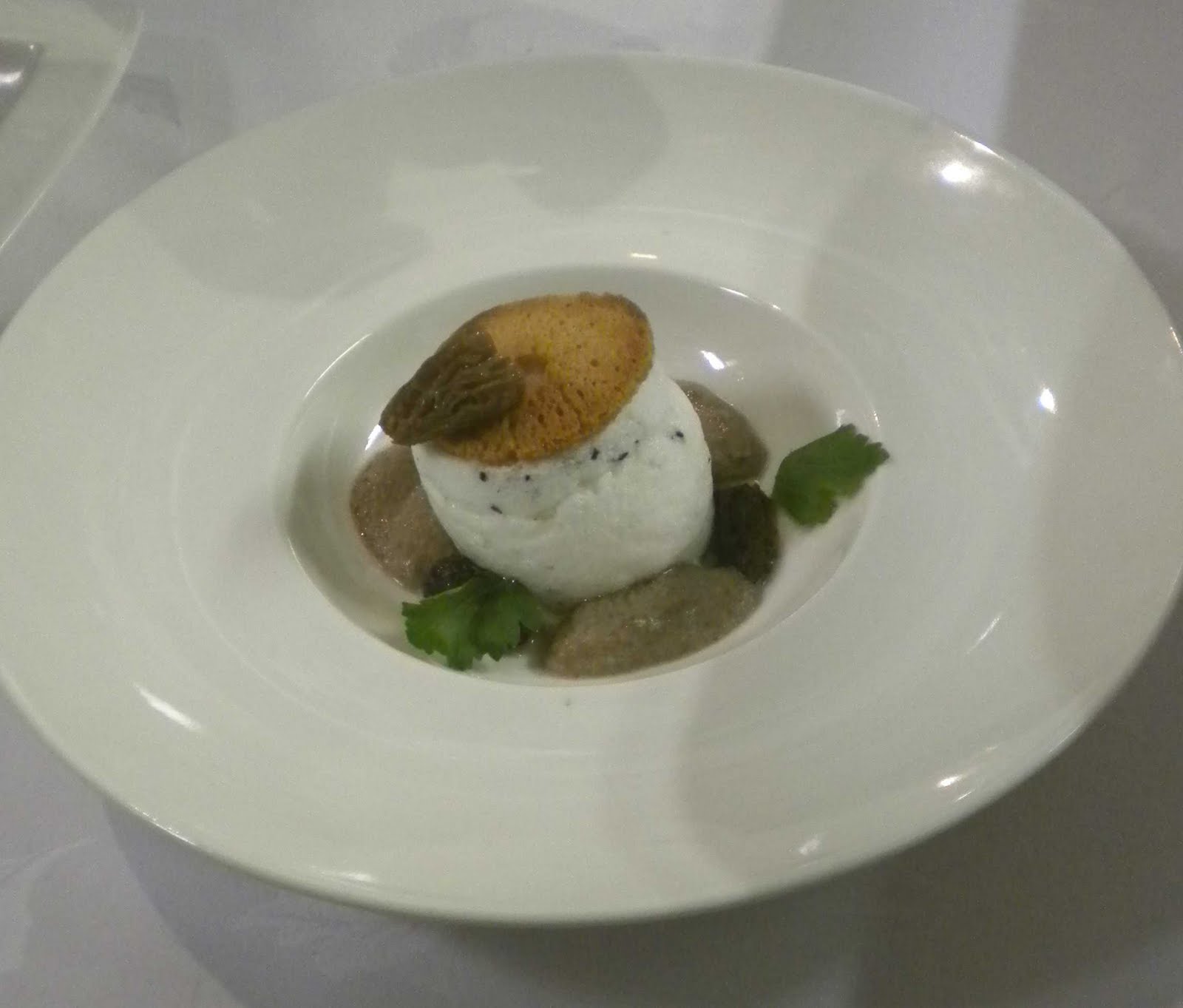
The starter was an egg white with a runny egg yolk in the middle. Now that was quite a nice trick chef did. This is a great starter when you have guests - with a surprise element!
The egg whites are beaten stiff (with a bit of salt and a drop of lemon juice) first. Then line a mould with paper and butter well. Make 2 rounds with this mould from a sandwich and put in the oven at 180 degC to make toast.
Put one slice of toast at the bottom of the mould, fill with a bit of stiff eggwhite (1/3), put in the (left whole) egg yolk with a bit of salt, fill the mould with the rest of the egg white and platten the top of the mould. Put in the oven for 2-3 minutes at 70 degC. Put the second pice of toast on top right before serving. Garnish; sauteed morels and some green leaves like parsley or chervil. And a sauce made from morels and beurre....
Trick: You can also finish dish dish in the microwave. That just takes 8 seconds at the highest power.
The name of the dish: Egg blancmange with a truffle and morel mushroom coulis.


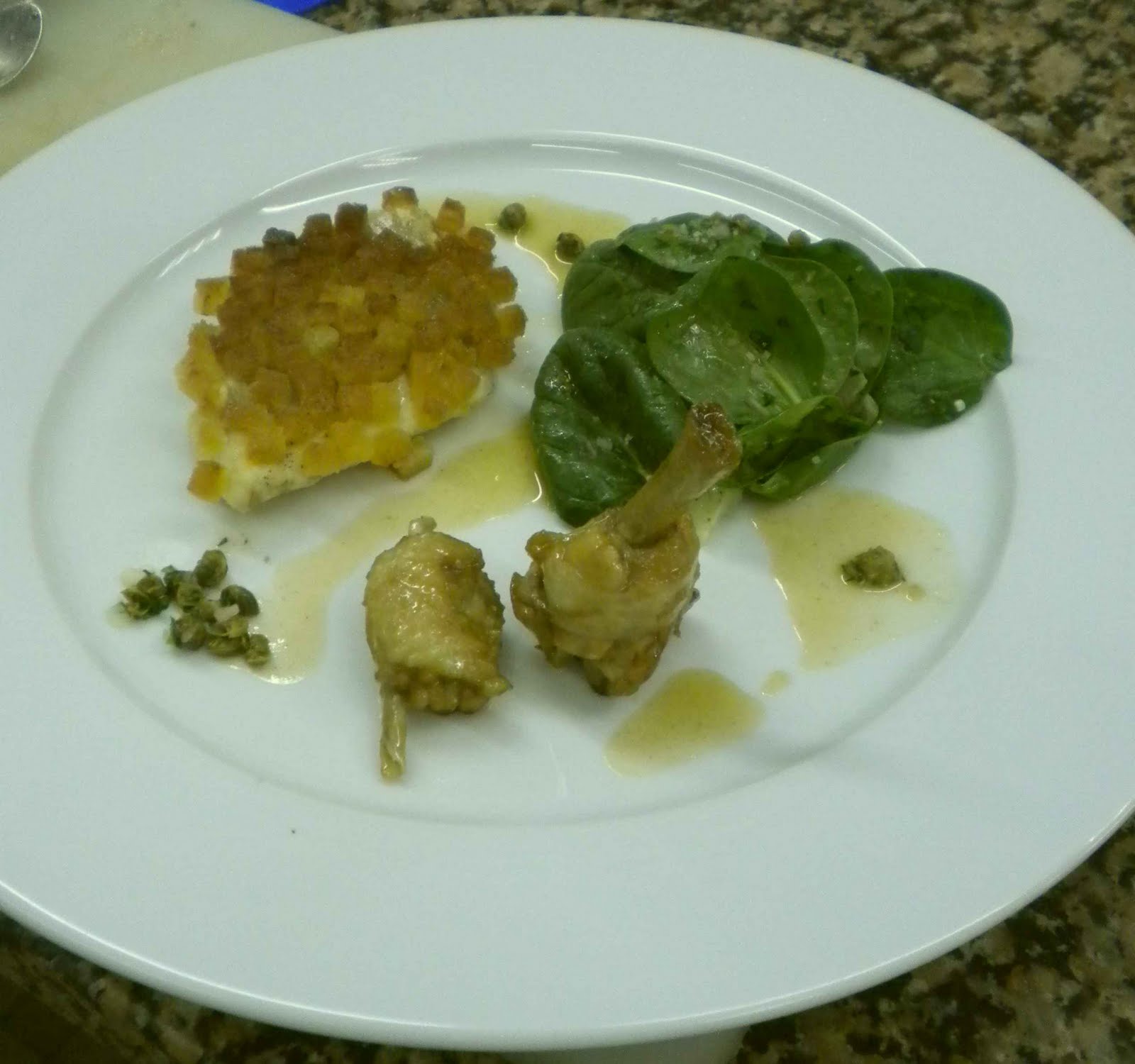
Mains: Crispy sea bass with French toast, capers and lemon and a chicken jus.
A chicken jus??? Yes, we ruin the dish again with a chicken jus....

I like this dish. Easy to make and the fish is surprisingly tasty, despite all the clarified butter we use. Already made this at home and we're going to make that for our friends this weekend. (They're German - I make BIG portions.... ha,ha!) I'm not making the chicken bit. 


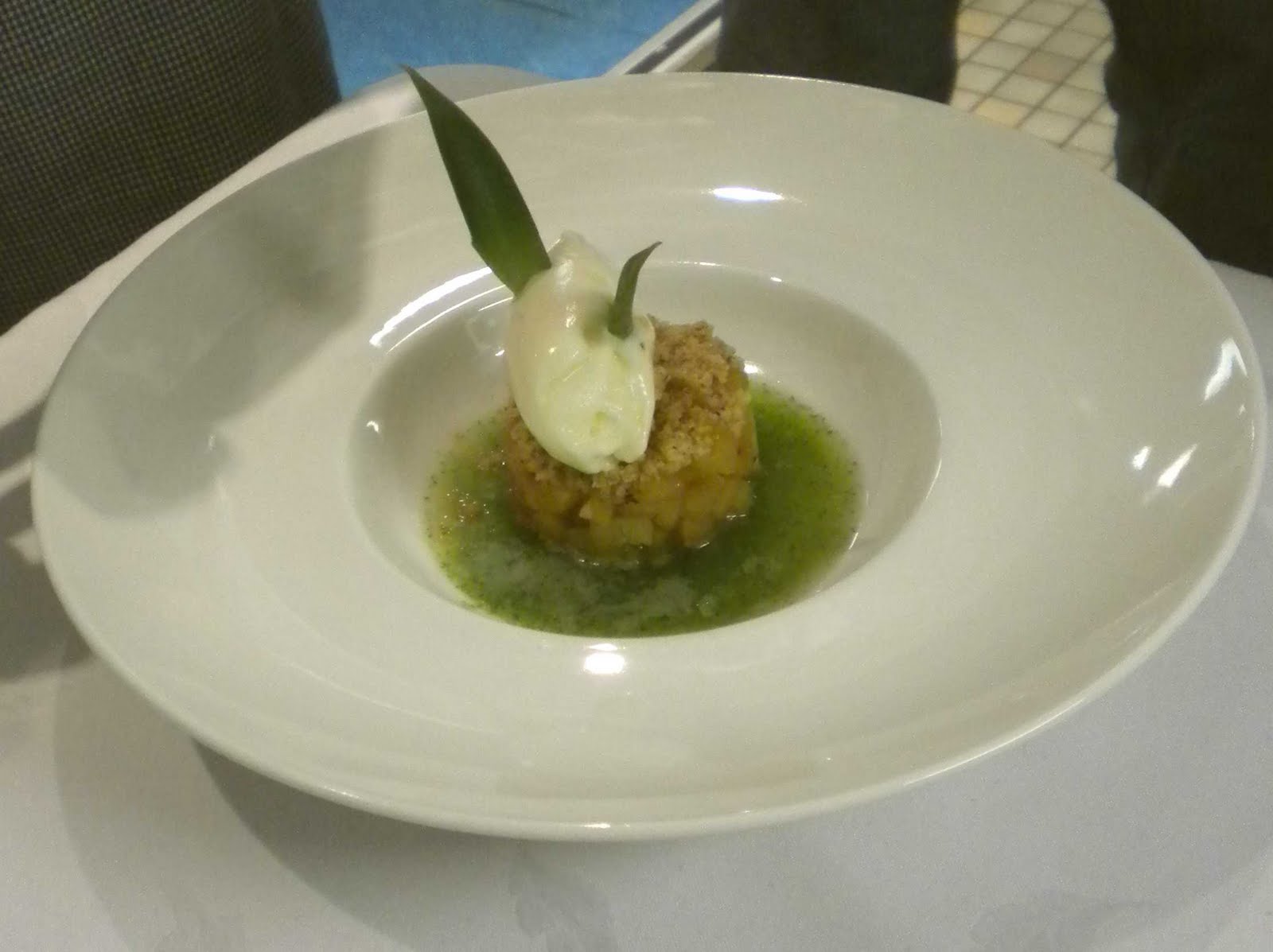
For dessert chef Terrien made us craquelin aux pommes, sorbet ananas et sirop de melisse-citronnelle.
It's some kind of crumble (craquelin) and compote  with a pineapple sorbet on top. Nice. I liked this as well. Instead of using apples for the compote you can also use pears.

Friday, 25 June 2010

Lesson 18, our second atelier (workshop).

I was looking forward to this workshop. This is the second workshop we had and I was not as nervous as I was for the first one.
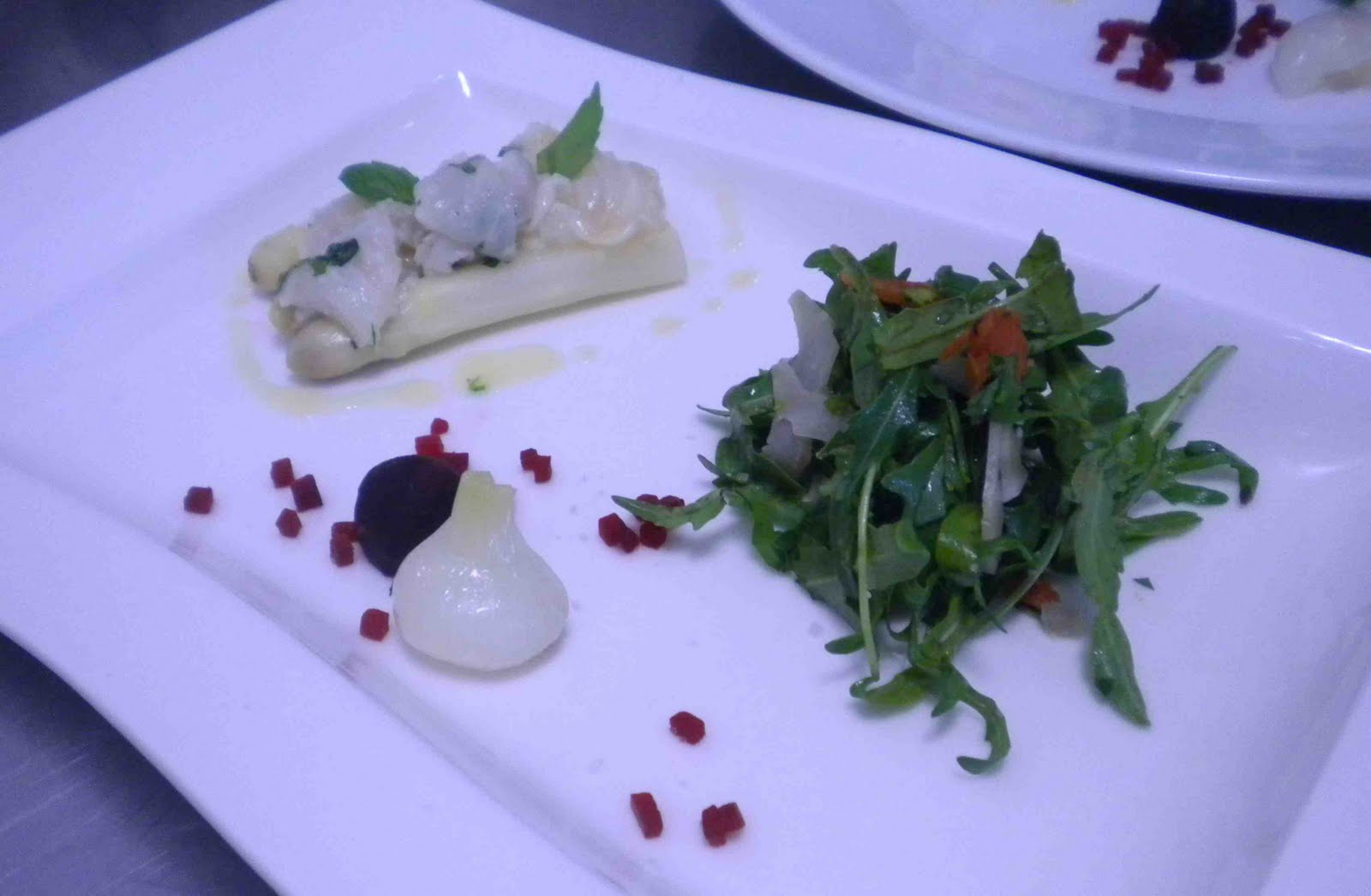
This time we have to use sea bream, veal tenderloin, sweetbreads, caul fat, artichoke, spinach, beetroot, cauliflower, pearl onions and asparagus. On top of that, there is a wide selection of vegetables, oil, wine, herbs and spices available.


I'm not that keen on the sweetbreads, I think they're tasteless 'waste' food, but at least I know what to do with the stuff. (soak, membrane off etc - pan fry/deep fry)
Some background on sweetbreads: It's a long-time foodie favorite, many, many people still have not tried them, or even know what they are. To be honest I can’t say I blame them with a name like sweetbreads. I mean, they are neither sweet, nor are they anything resembling bread.
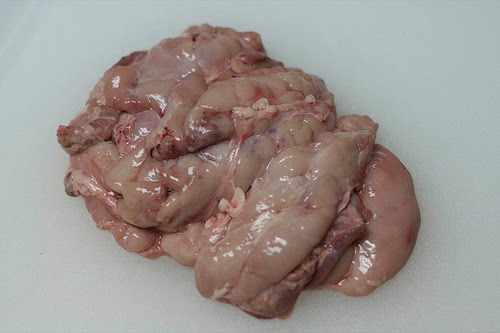
So what are they? Well, as eloquently as I can put it, sweetbreads are the thymus glands of young veal, pork and lamb. That’s right, today we’ll be learning about eating thymus glands! Yuk! Here’s what they look like:
Now we can get these thymus glands from two places, the first is just below the throat of the animal, and the other is near the heart, which are generally more prized and more expensive as many consider them to have a better flavour. Enough about this stuff...
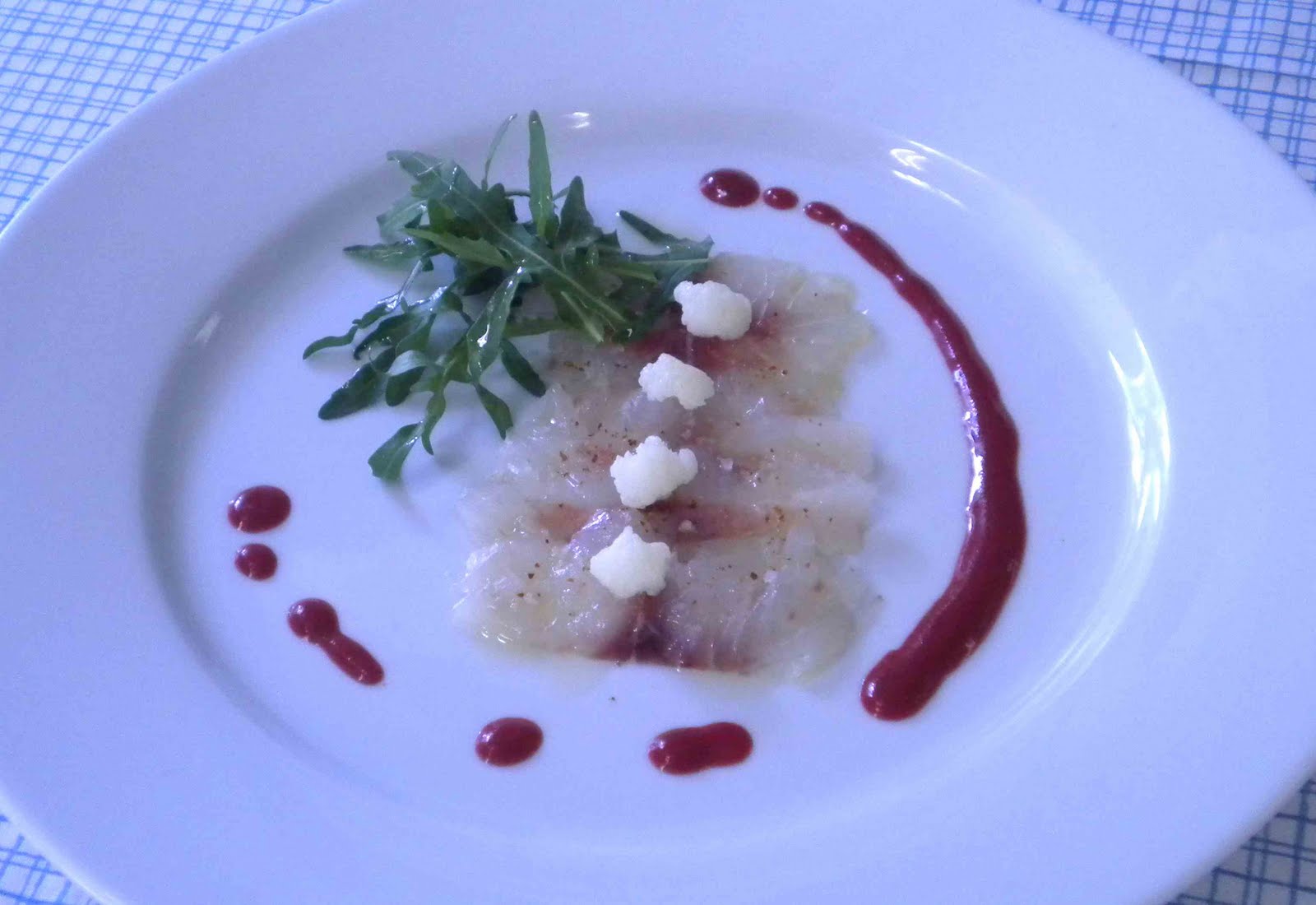
I decided to make a (raw) sea bream carpaccio on top of cold asparagus, a drizzle of (fish) sauce around it and a mixed herb salad and a vinaigrette for a starter.
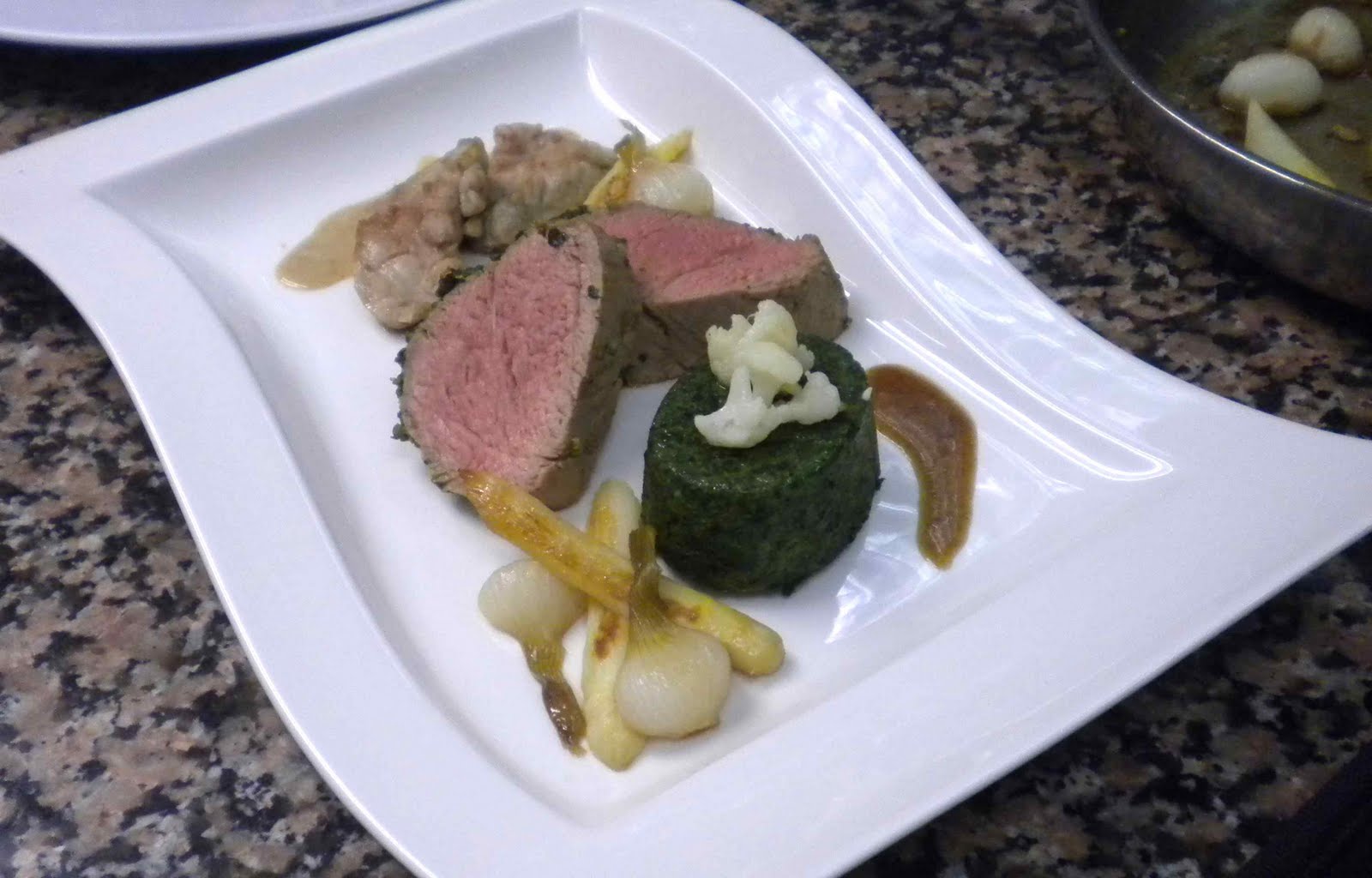
For mains I did a grenadin. (That's a nice veal steak.) Use the trimmings for the jus, make a pepper crust for the veal, a cauliflower flan, 'packages' of spinach/lemon zest, fried sweetbreads (clarified butter, espelette pepper) and some cooked pearl onions. Easy on the pepper for the crust; It can be very overpowering! I think I did OK with this whole dish. Little chef, la petite, thought it was OK. Not super, not bad.


Not surprisingly, we all make something completely different again. These workshops are a great way to practice for the final exam. Here is an impression of the results. (I have more pictures available for those who want to see more.)


Thursday, 24 June 2010

Dishes during the course, 22-29 April; 3 demo's.

Part 2. Lesson 15, 16 and 17.
Let's start with a few pictures.

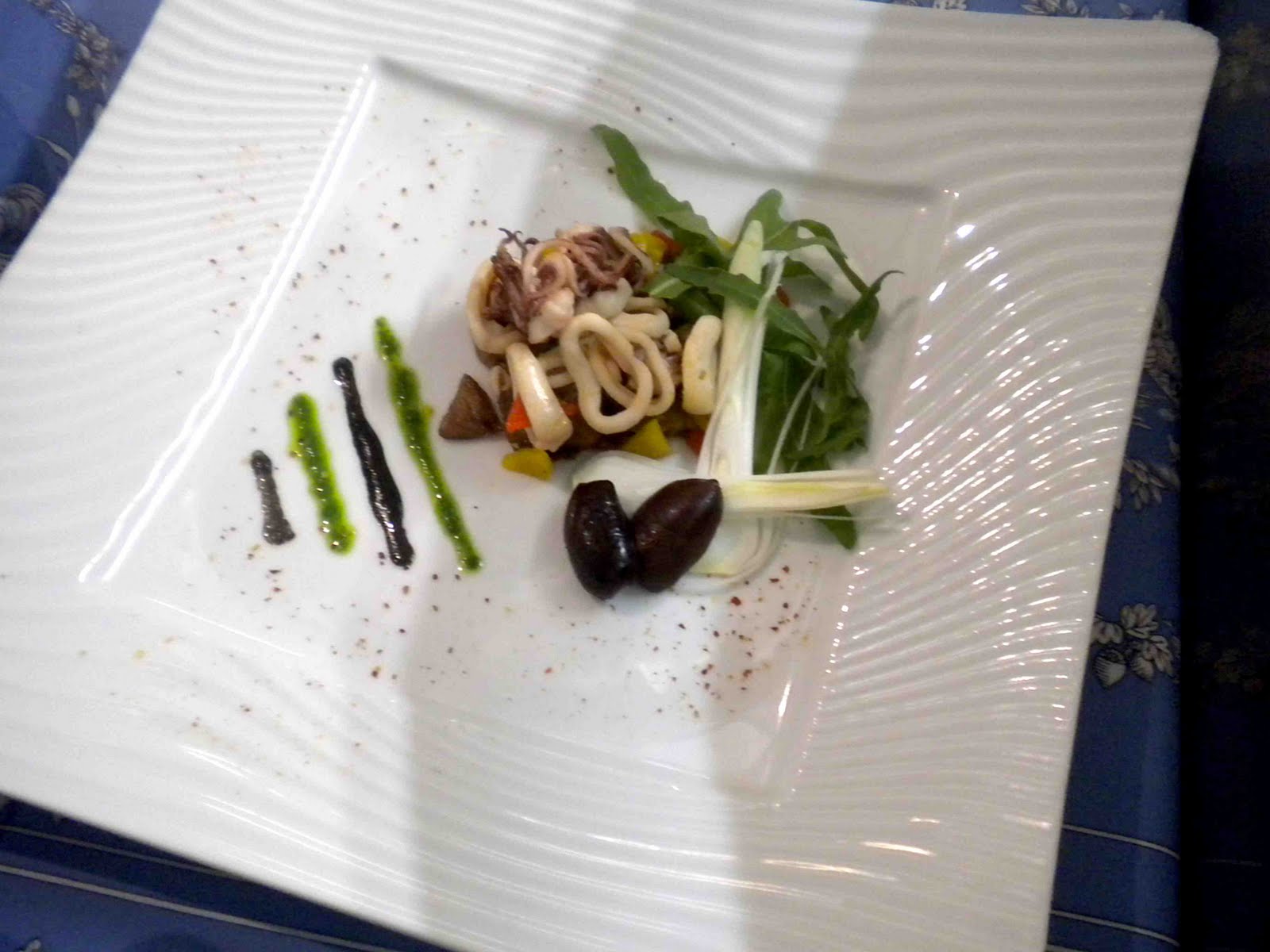
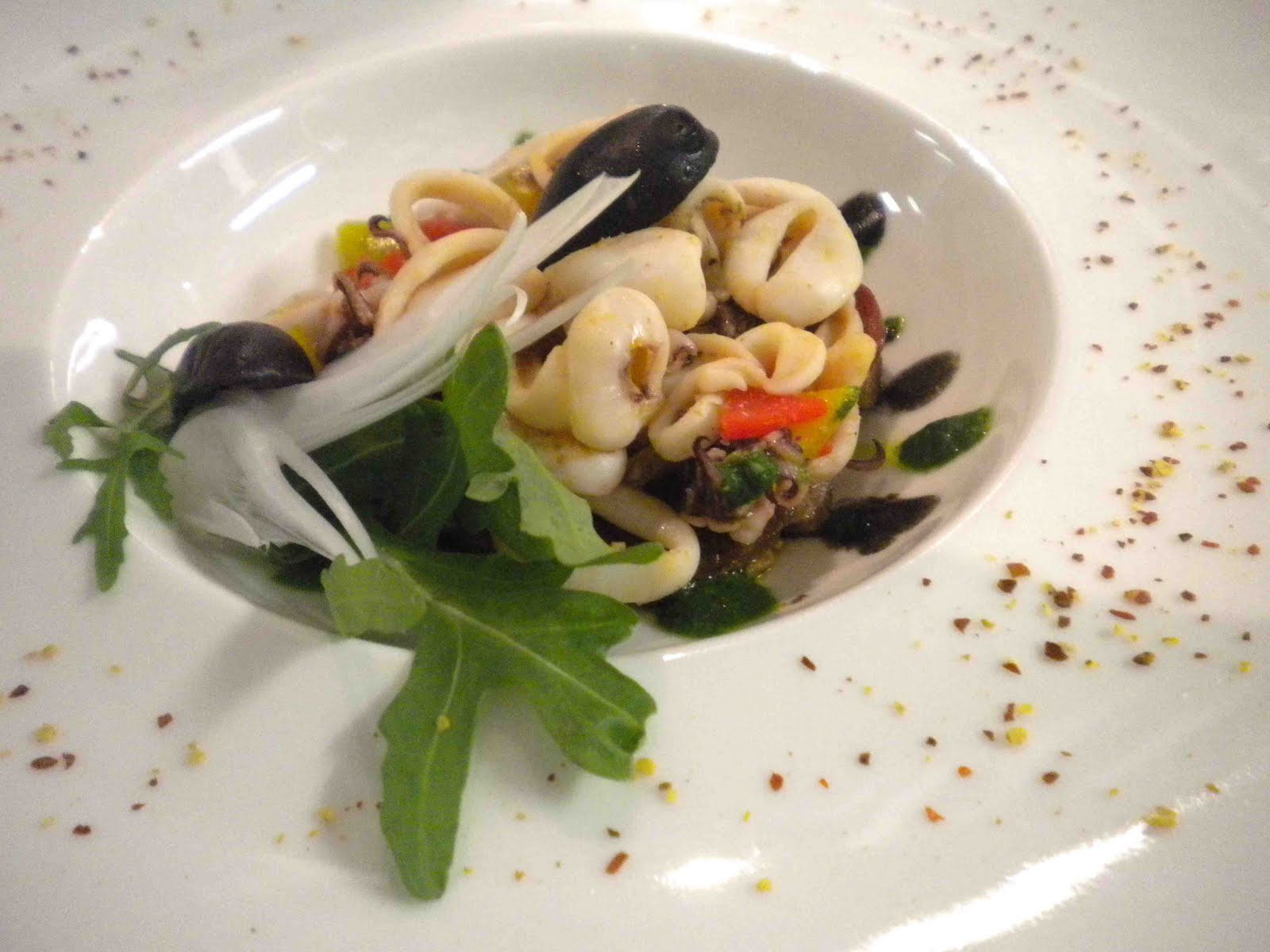
starter: baby calamari with chorizo, bell peppers and rocket pesto. A nice summer dish.
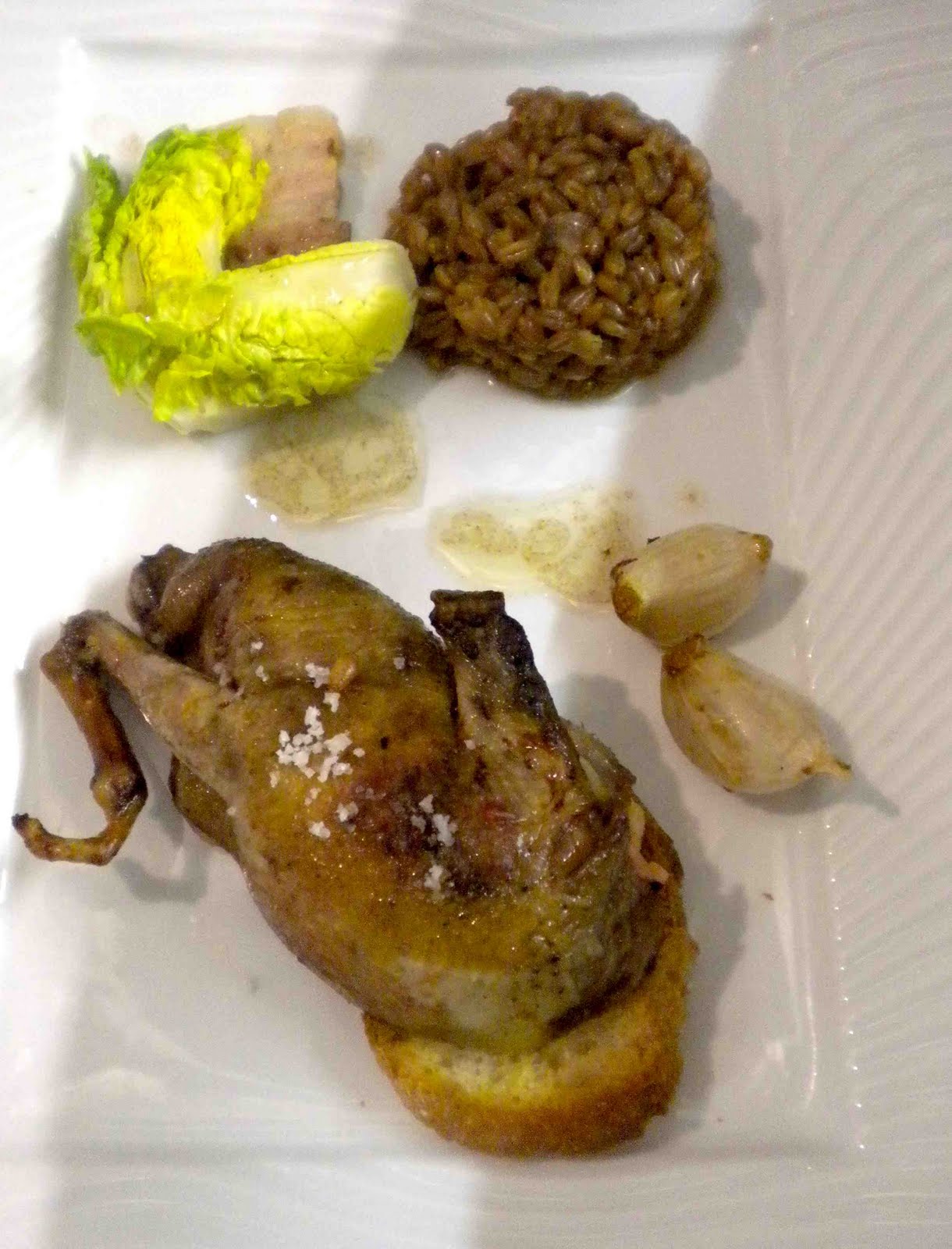
A creapy handicapped looking squab.... It just looks funny. Deboned and stuffed, cooked in a cocotte with pork belly (and lots of garlic!)
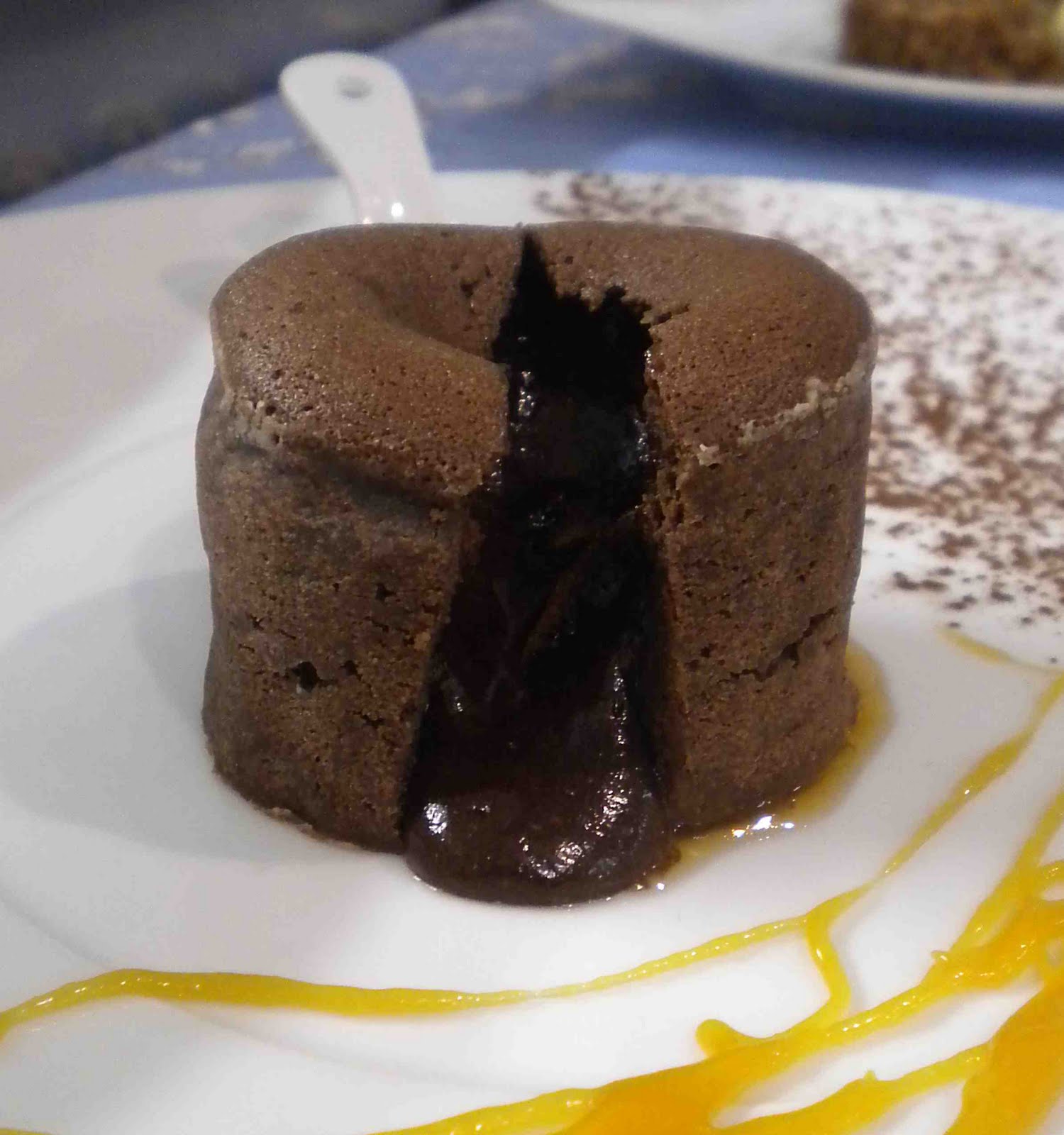
Dessert: bitter chocolate soft-centered cake with arabica sorbet. Very,very nice indeed!
(recipe on request....)
Lesson 16;
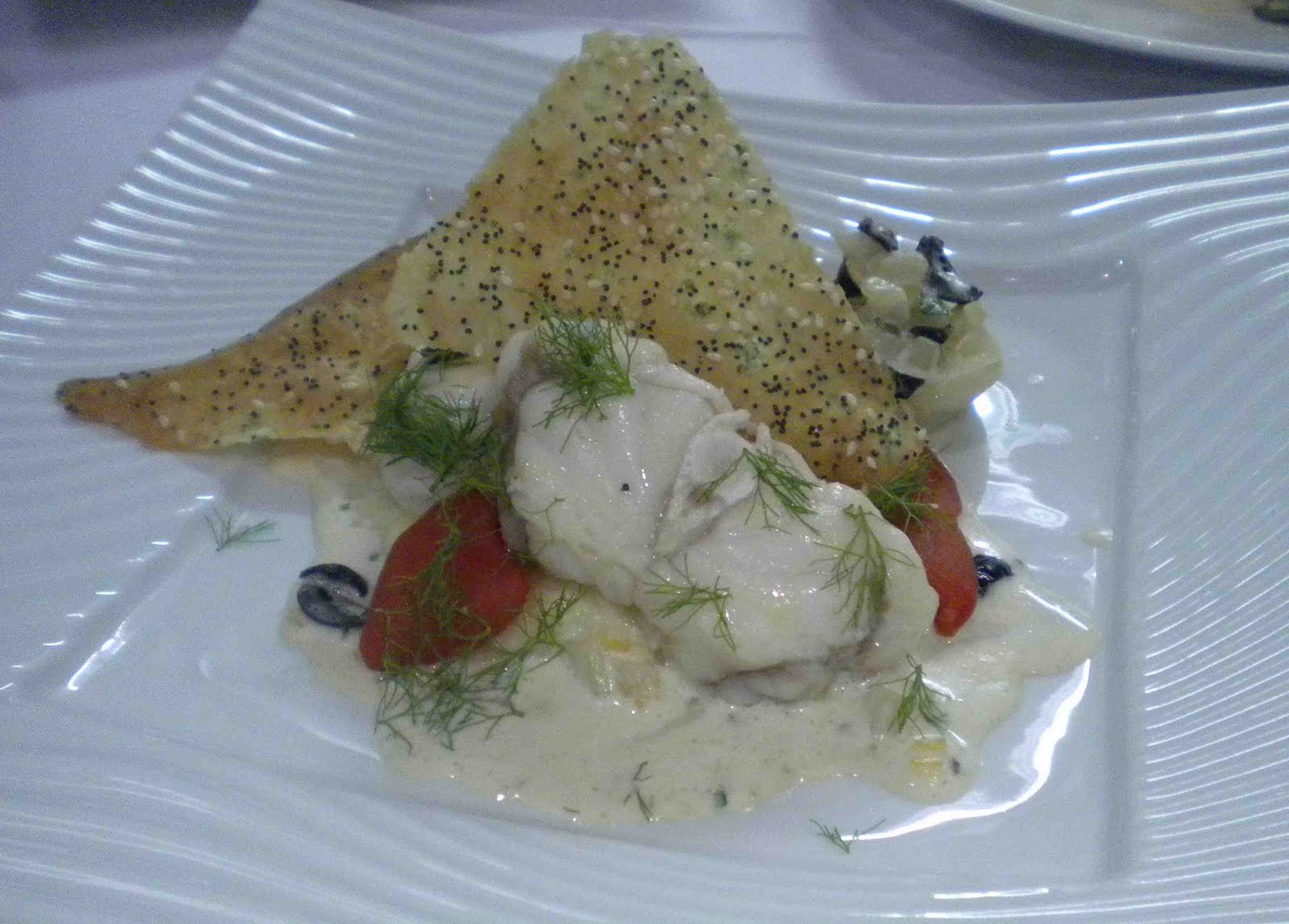
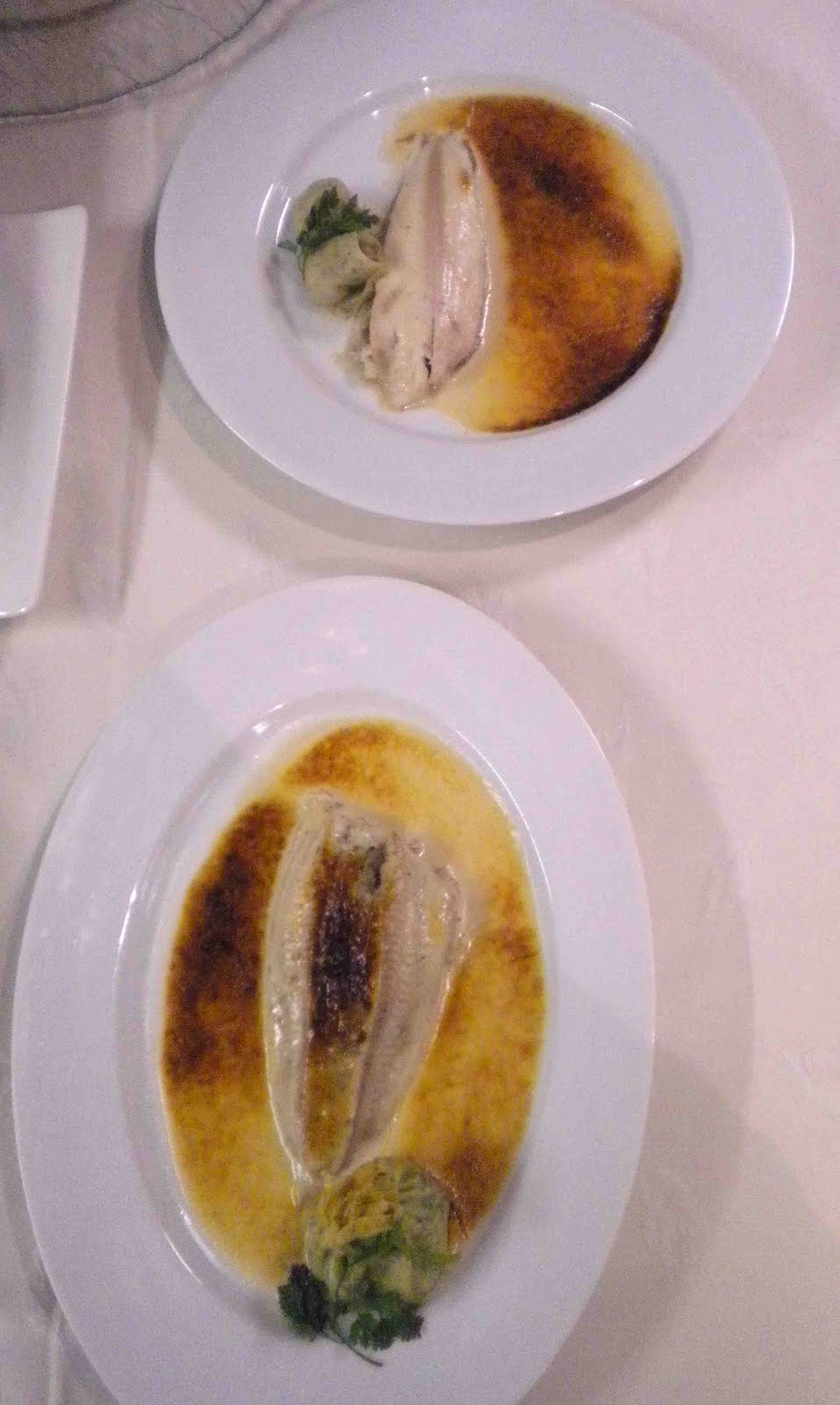
Then chef made something with (greasy) fish; Sole, a very nice fish. Easy to make, but I thought it was a bit of a waste of a good fish to 'let it swim like this in the sauce'. I know that it's all about the style and technique, but I didn't like the presentation of this this. I skipped the corresponding practical.....

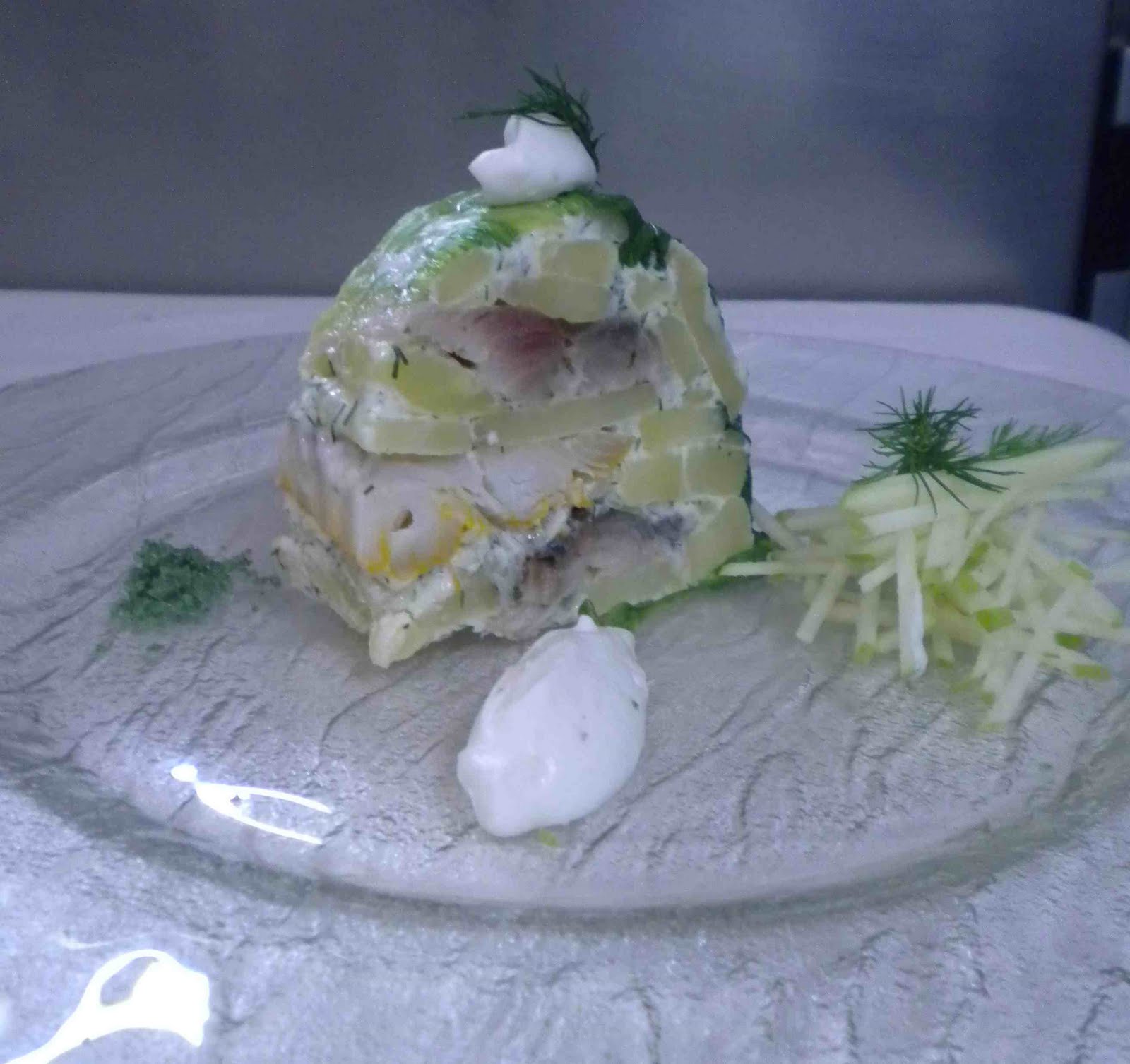
starter; haddock, mackerel and potato terrine with dill and a horseradish sauce. The makerel is poached the night before. Haddock is always smoked in France, so please pay attention when you buy this.
It's best to make dishes like this well in advance, it's better to let it rest overnight in the fridge to get more flavour.

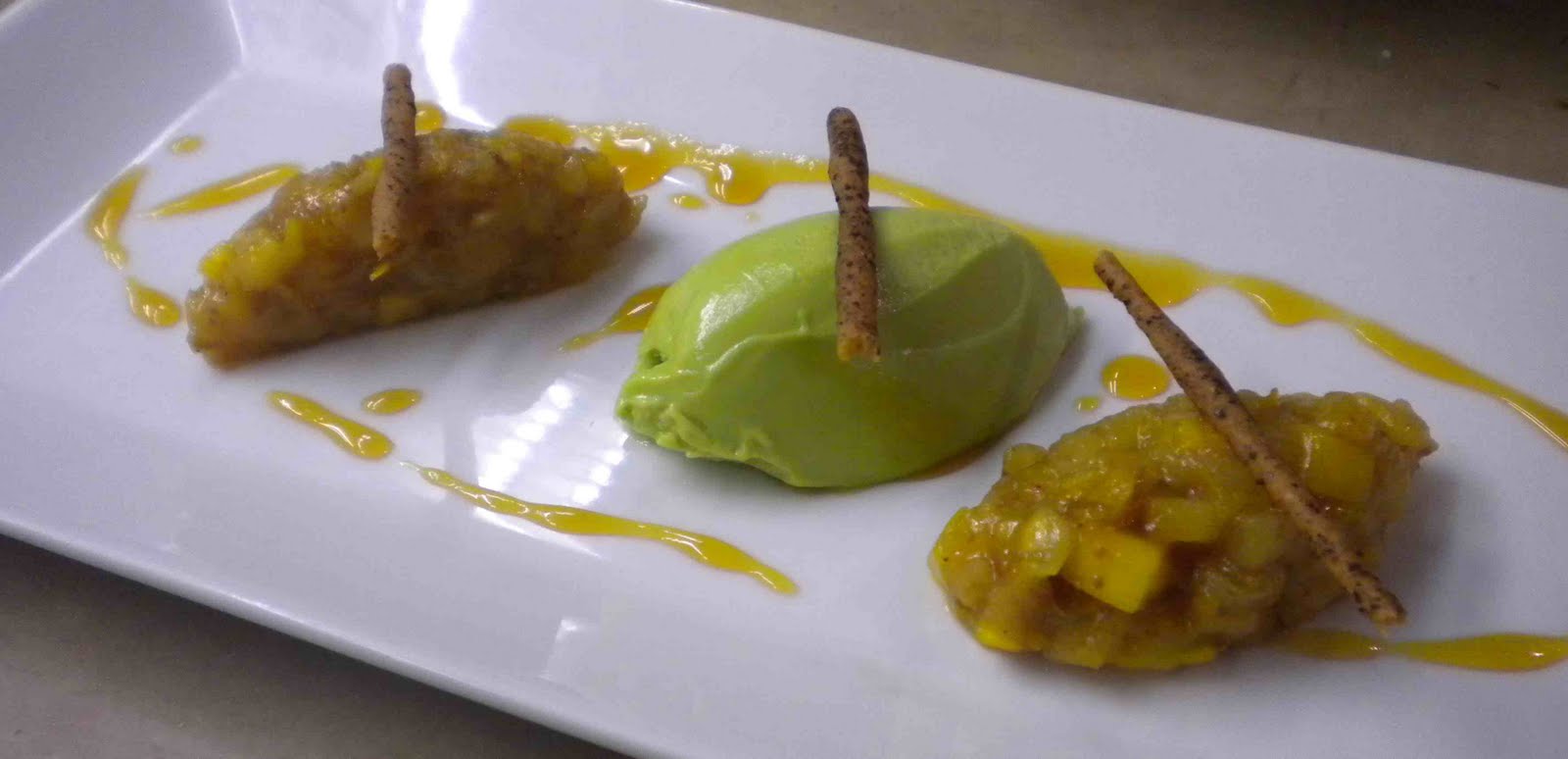
An avocado sorbet for dessert. A what?? Yes, and it was surprisingly good. Served with a mango and pineapple chutney (French style) and shortbread pastry sticks.

Lesson 17; Let's start with dessert!
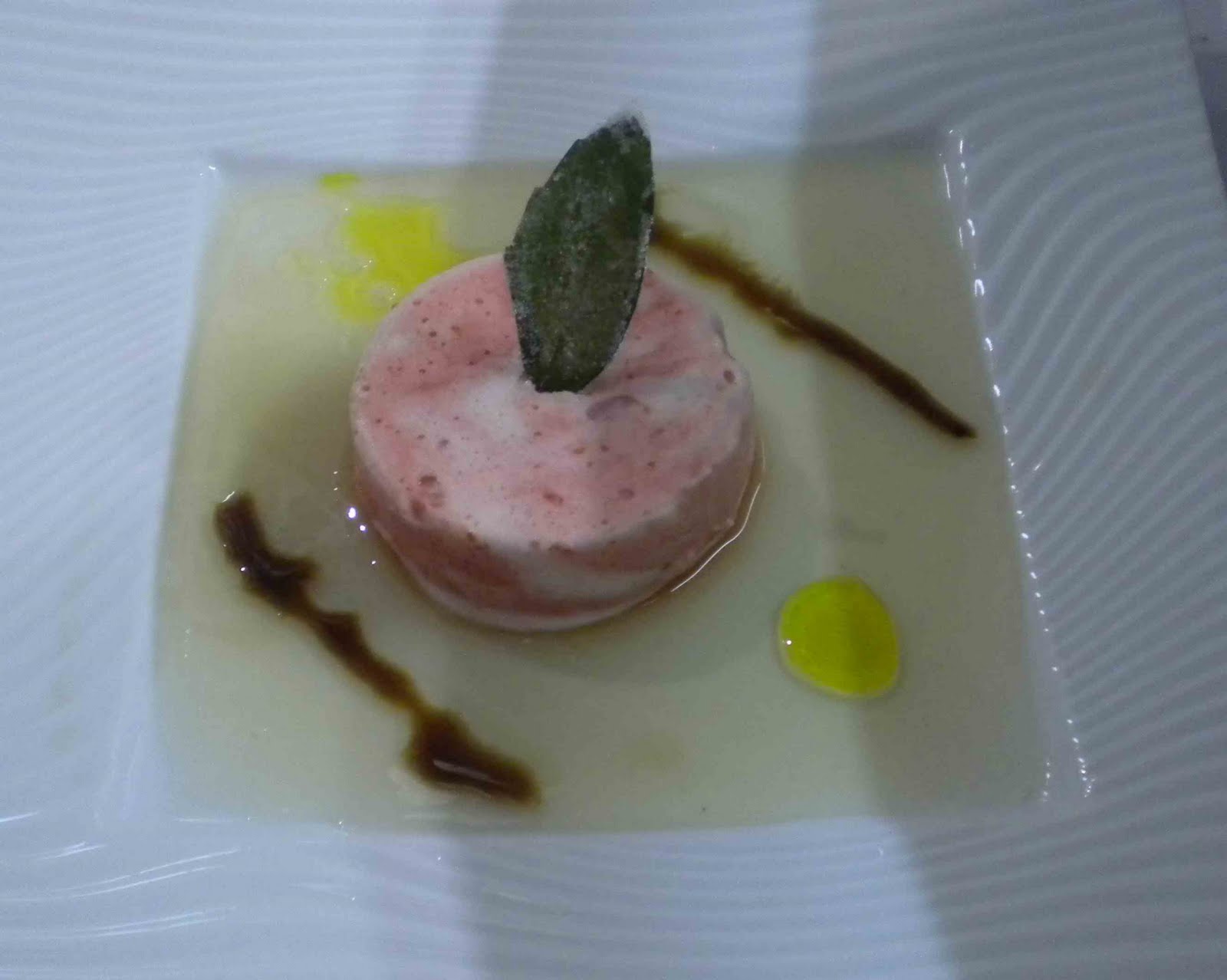
Sauternes wine jelly with a marbled lemon sorbet and a balsamic jus. A very refreshing dessert. Presentation: one round piece of sorbet or two small(er) strips.


Pan-fried monkfish, a vegetable puree of parsnip, Jerusalem artichokes (and lots of beurre et creme) and potato crisps.
Crips are made with waxy potatoes, like BF15. Peal, cook well and dry out in the oven at 140degC. Puree the lot, pass through a drum sieve (and add butter when warm!) Lay a bit on a sylpat and roll out very thinly. Sprinkle with fleur de sel and sesame- or poppy seeds and put in the oven at 150degC. (option: mix a bit of parsnip puree with the potato puree for more flavour!)


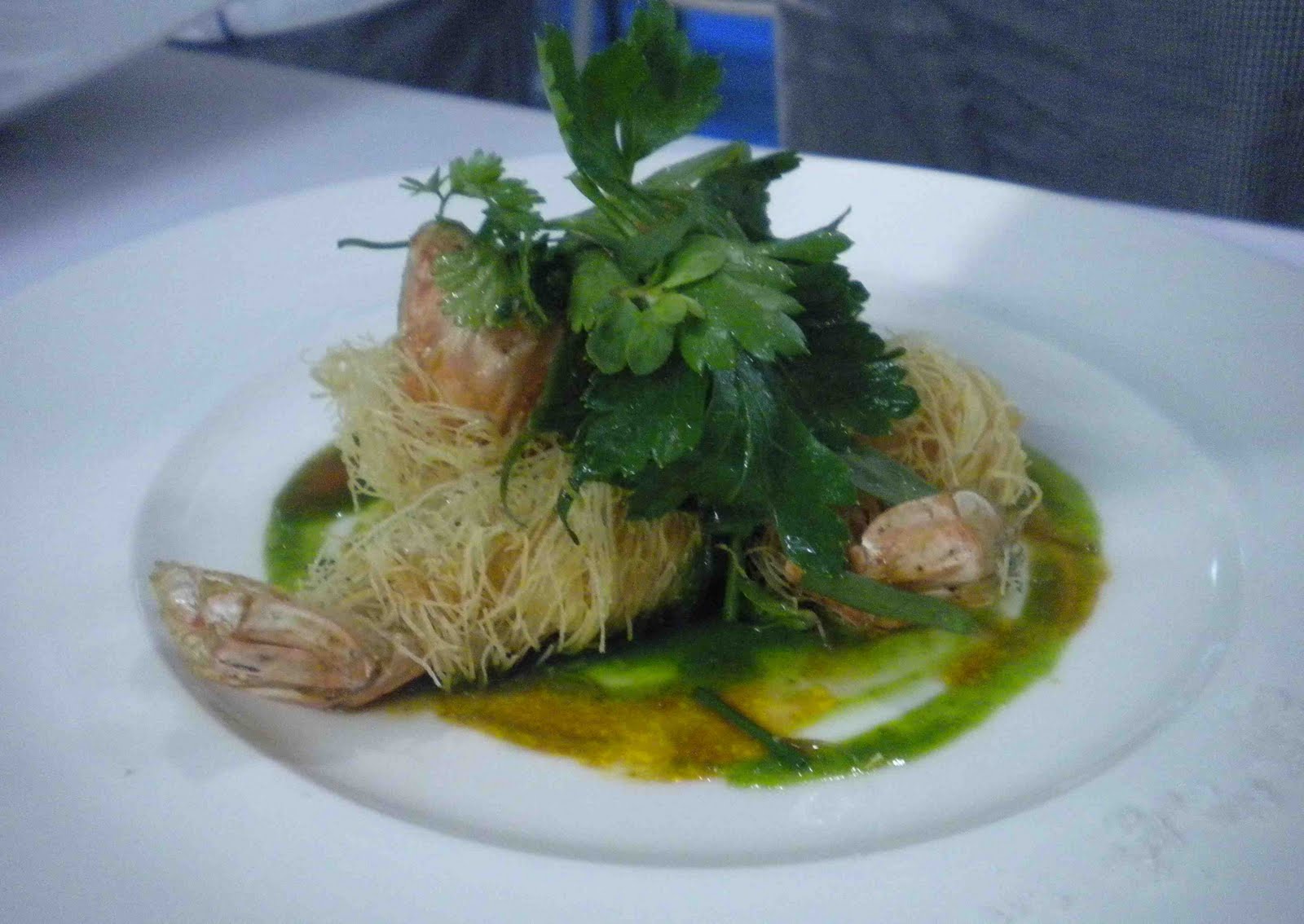
Crisp langoustines with a citrus emulsion, olive oil and wasabi for the starter. Chef Terrien had a creative moment...
I liked this starter, very light and tasty (spicy!). The kadaif pastry we use here is Turkish and made from cornstarch, flour, water and salt. Presented with a herb salad; That's easy - mix chervil, flat leaf parsley, tarragon, lemon grass, mint and marjoraml. Add a bit of herb-vinaigrette (last minute) with a drizzle of olive oil and lemon juice.

tip: For a nice herb vinaigrette: reduce a bit of orange juice (strained!). Put basil leaves, coriander, few spinach leaves for extra colour (all herbs chopped up), wasabi and a pinch of salt in the blender. Blend with olive oil and the cold reduced orange juice.
(You can add a little bit of water if needed.) Check seasoning. Result: Green, spicy vinaigrette.


Next is our second atelier (lesson 18) with sea bream, veal tenderloin, sweetbreads, caul fat, artichoke, spinach, beetroot, cauliflower, pearl onions and asparagus.

Wednesday, 23 June 2010

Dishes during the course.


Last May, I promised to write a bit more about the dishes we made during the superior cuisine course. I was a bit behind with the blogging back then, but now it's time for the first update. I'm home now for three weeks and I've also been shopping in the kitchen stores here in Amsterdam. The latest purchase is a new KitchenAid blender. This is something we used a lot during the course. It's the perfect tool to make sauces, chop up herbs and vegetables and make ice cream. So we decided to buy one.

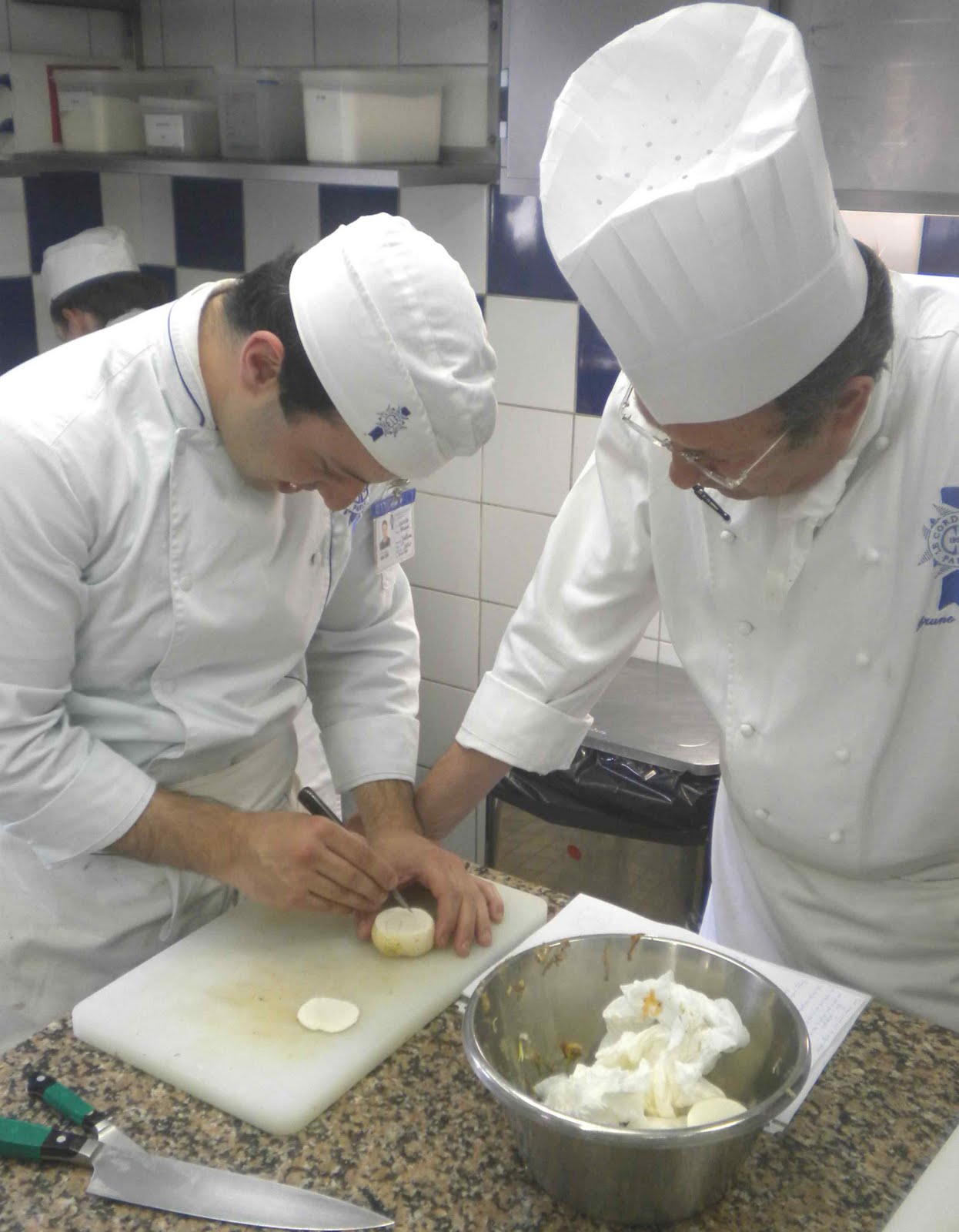
Right. Menus. Dishes we made. Turning mushrooms again...
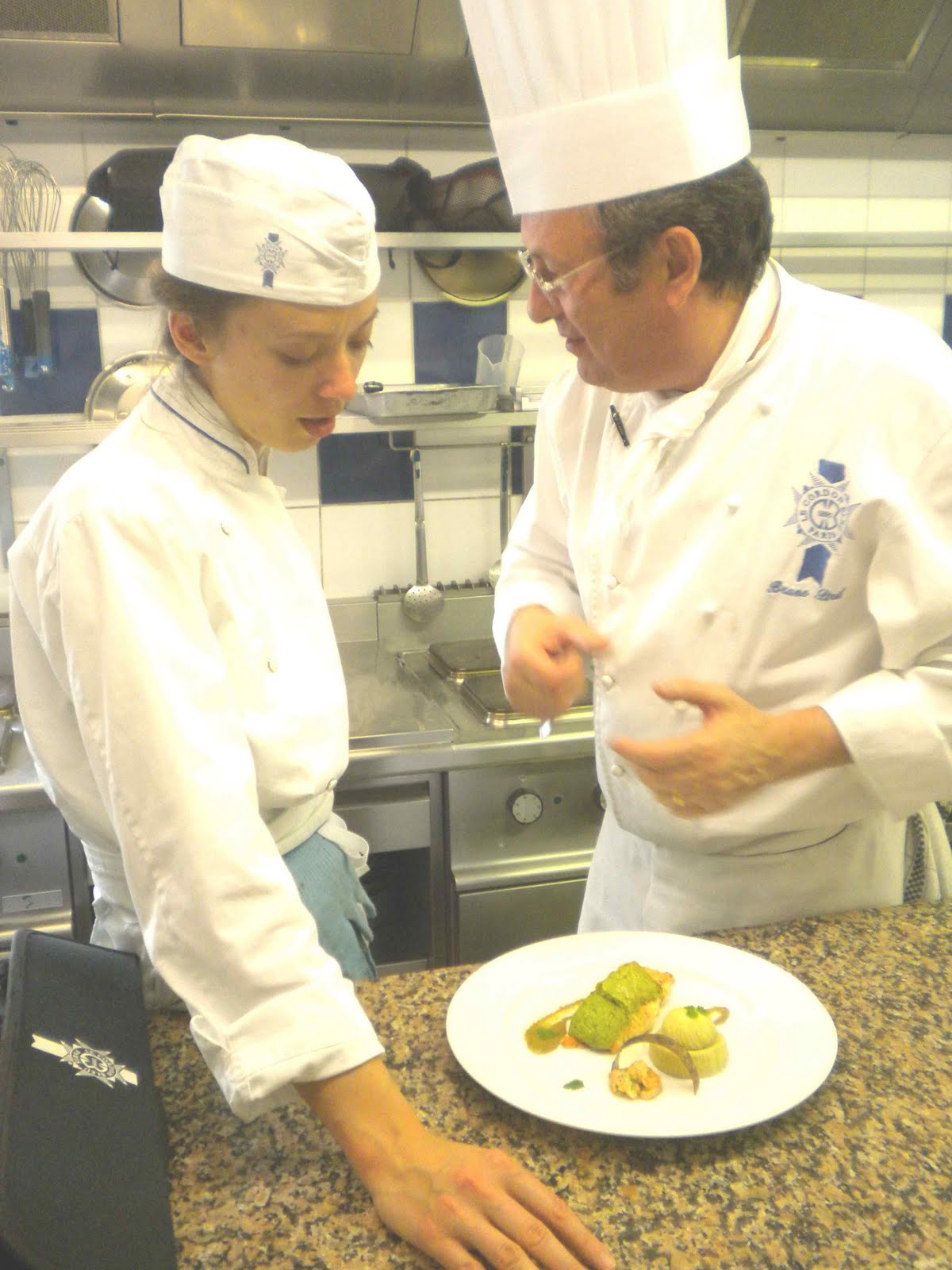
Lesson 14. Classic cuisine.
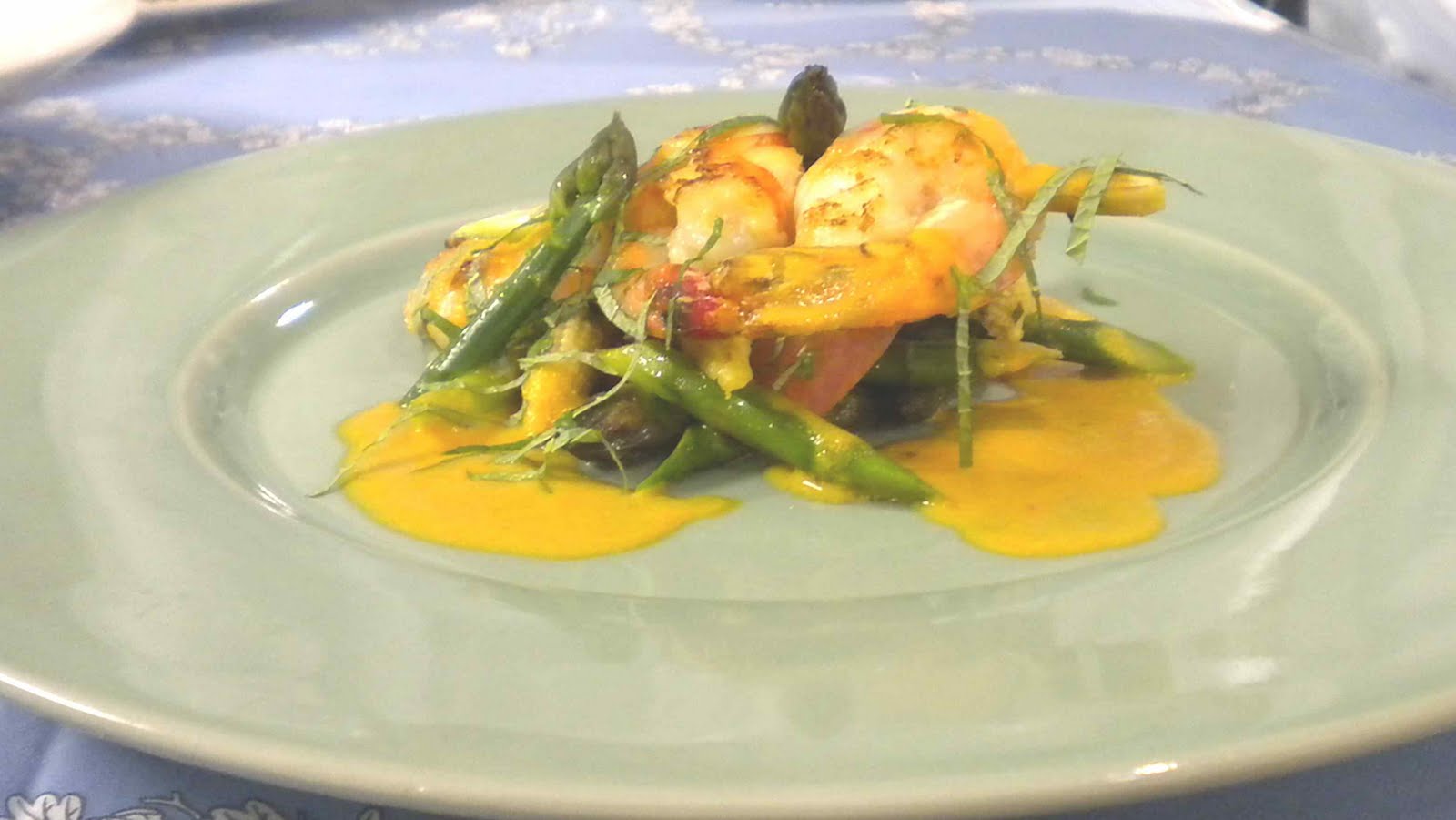
starter: Roasted jumbo shrimp on a stick of lemon grass
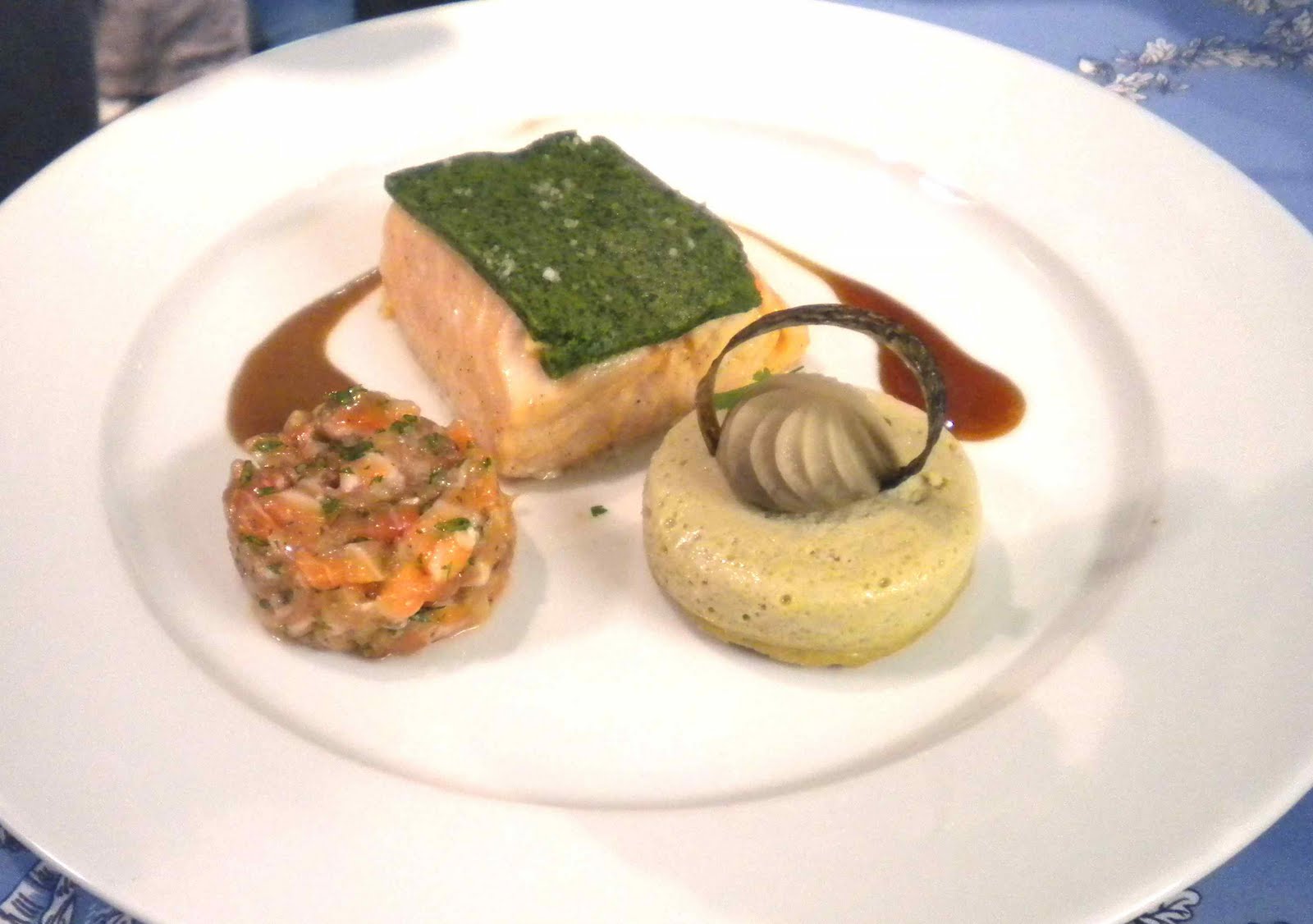
mains: a thick salmon steak with a (butter based!) herb crust, a mushroom flan and a creamy (veal stock based???) jus. Typical LCB - veal stock with a nice fish dish....
and for dessert chef made pistachio creme brulee with a tuile.

The trick with the flan was to clean the ramekins really well and butter them generously. Then keep in the fridge to 'set the butter'. The herb crust was nice and very easy to make. You just blend/grind some herbs like chervil, parsley and coriander, add some butter and almond powder, breadcrums and an egg and roll it out thinly on some parchment paper. Finally you freeze it and when you need it, you just cut it to the right size. Easy-peasy!
And I never thought you could re-use the salmon skin. Chef rolled a (cleaned) strip around a metal mould and dried it out in the oven at 100degC for 2 hours in a convection oven. The result was a dry ring of crispy salmon skin for decoration on the plate. Nice trick!
With the left-over salmon or trimmings you can make a salmon tartare. Don't throw these trimmings away! Ever !
Chef's dish.
starter, shrimp something...
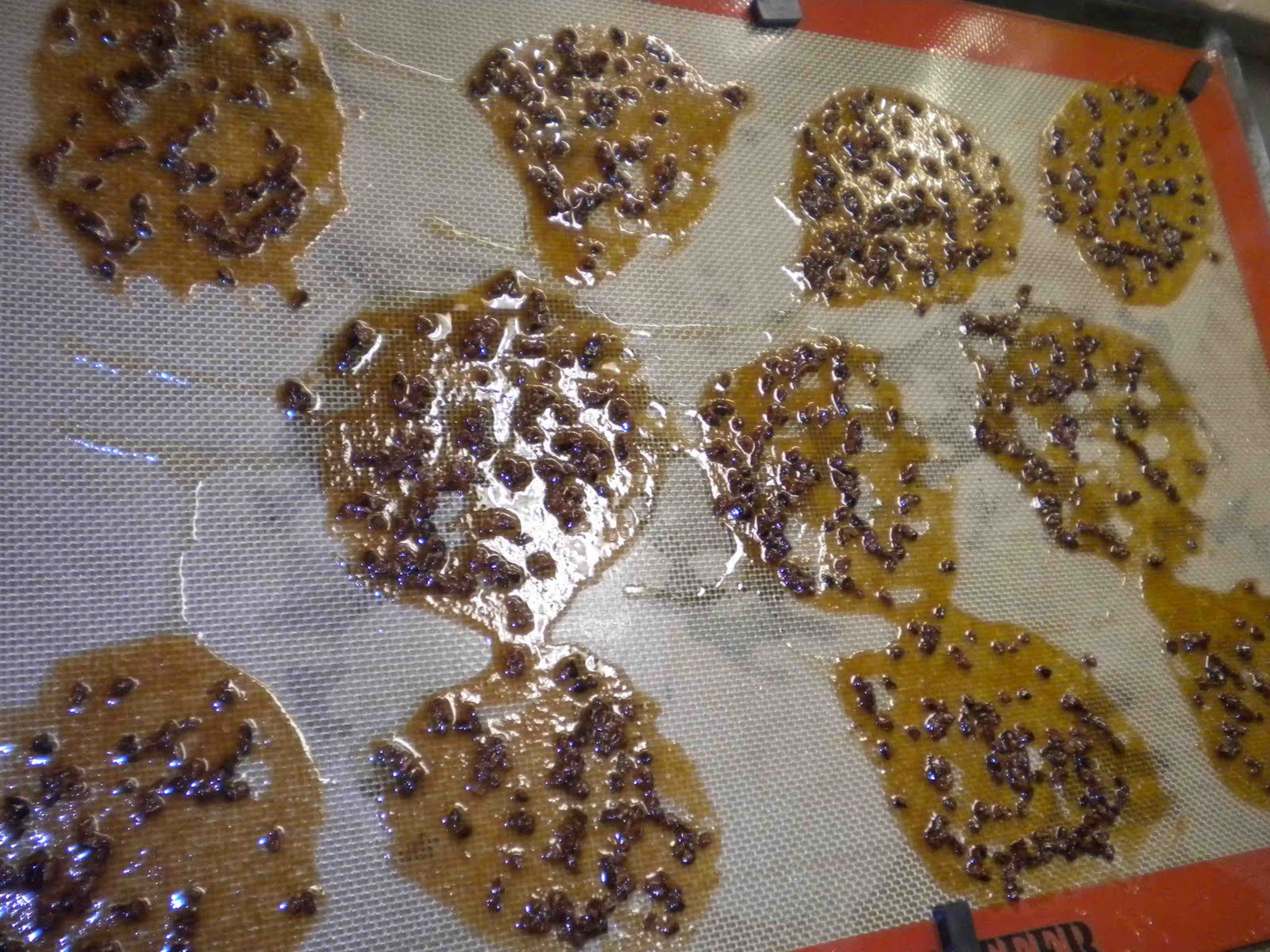
Tuiles in the oven. Let it cool down a bit, then wrap it around a rolling pin to make a nicely shaped tuile. (recipe on request!)
Mayra turning mushrooms.
Adriano struggling...
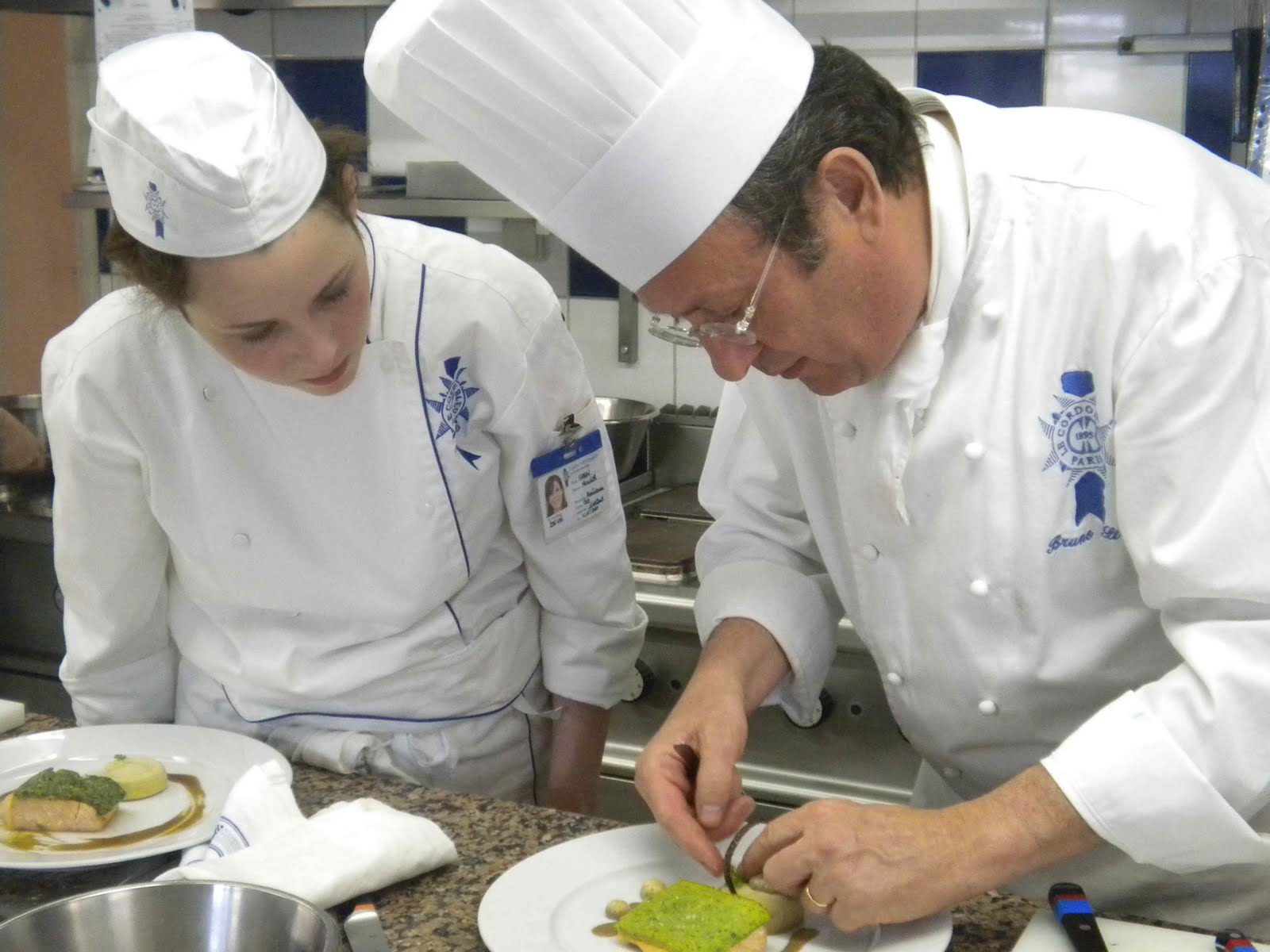
Comments from Bruno. Meredith's dish.
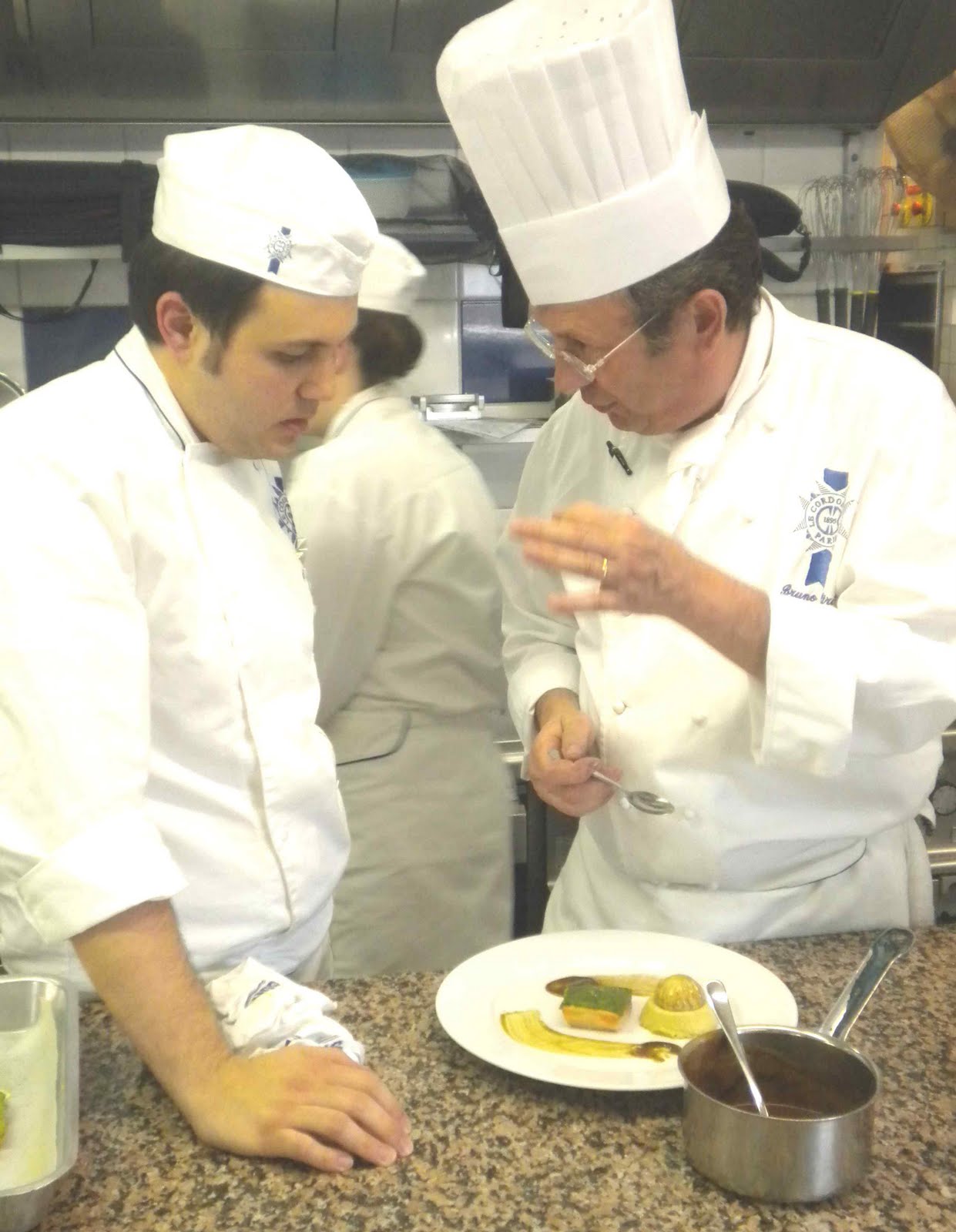
Carlos listening to Bruno.
Victoria's dish.
more to follow soon.
Sjoerd